How to Calculate Calorie Burn and Daily Intake Accurately
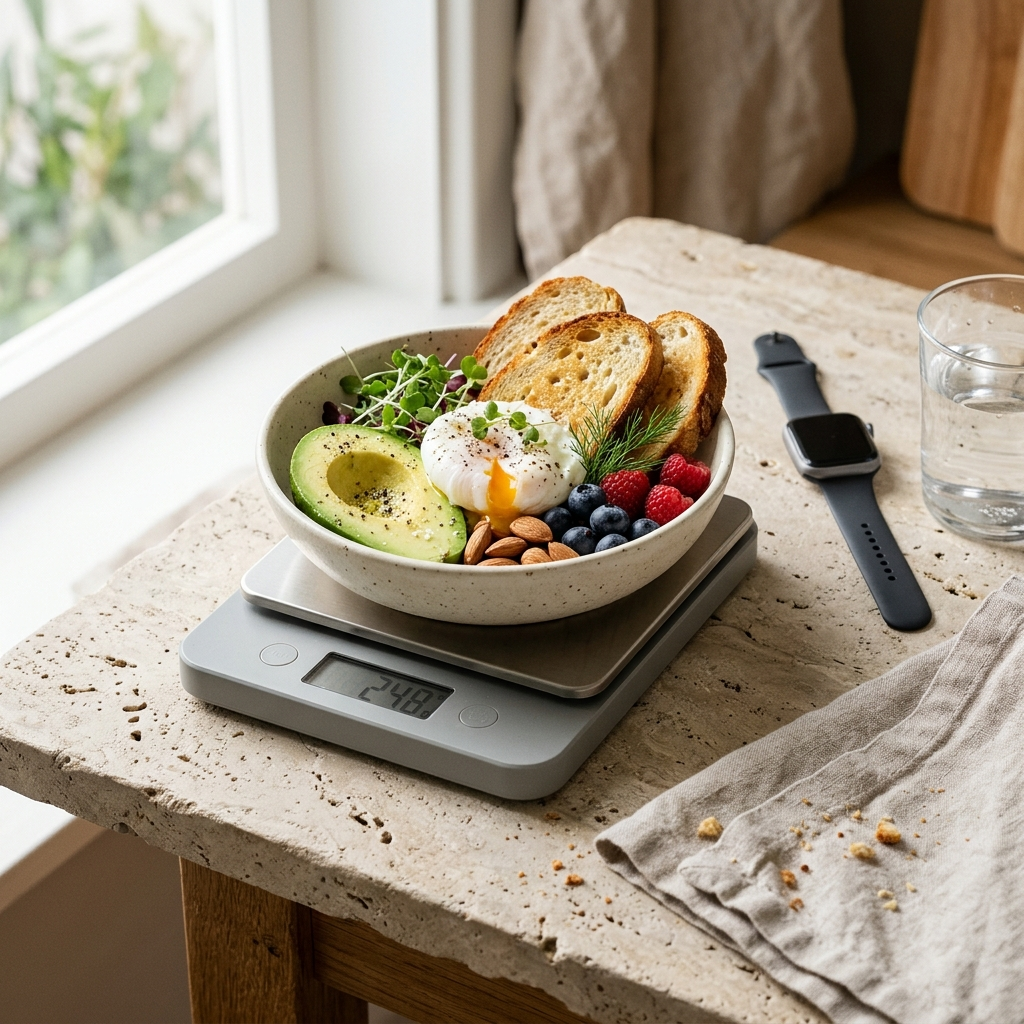
Calculating calorie burn and daily intake accurately requires determining your Basal Metabolic Rate (BMR), adjusting for physical activity to find your Total Daily Energy Expenditure (TDEE), and recording food intake consistently. Standardizing both expenditure and dietary intake allows you to manage body composition targets reliably rather than relying on guesswork.
The Core Challenge of Energy Balance Calculation
Most nutrition plans falter because self-reported estimates of portion sizes and energy expenditure are consistently skewed. Research indicates that individuals frequently underestimate dietary intake by 20% to 50% while overestimating exercise burn. This variance creates unintended surpluses or deficits that stall progress.
Energy balance follows thermodynamic principles, yet measuring both sides outside laboratory settings presents practical challenges. Without standardized equations and consistent tracking, short-term weight fluctuations from water retention or digestive changes obscure real progress. Achieving reliable results requires an objective, repeatable protocol for calculating input and output.
Key Takeaway
- Self-reported food and exercise estimates deviate significantly from biological reality, making objective measurement methods essential.
Establishing Baseline Expenditure: BMR and TDEE
Your body expends energy through three primary components: basal metabolic function, physical movement, and digestion. Basal Metabolic Rate accounts for roughly 60% to 75% of daily energy expenditure, representing the calories needed to sustain vital functions at complete rest.
To estimate BMR without clinical equipment, use validated predictive equations based on biological markers:
- Mifflin-St Jeor Equation: The standard clinical baseline for the general population. For men: (10 × weight in kg) + (6.25 × height in cm) - (5 × age in years) + 5. For women: (10 × weight in kg) + (6.25 × height in cm) - (5 × age in years) - 161.
- Katch-McArdle Formula: Used when body fat percentage is known: 370 + (21.6 × lean mass in kg).
Total Daily Energy Expenditure is calculated by multiplying BMR by an activity factor reflecting routine movement and intentional exercise:
- Sedentary (desk work, minimal daily movement): BMR × 1.2
- Lightly Active (daily walking, 1–3 workouts per week): BMR × 1.375
- Moderately Active (exercise 3–5 days per week): BMR × 1.55
- Very Active (intense training 6–7 days per week): BMR × 1.725
Key Takeaway
- Calculate baseline energy needs using formulas like Mifflin-St Jeor, selecting an activity multiplier that matches your actual weekly routine rather than aspirational goals.
Refining Calorie Burn: Avoiding Activity Tracker Overestimation
Wearable devices and gym equipment frequently estimate caloric output using elevated heart rates, which can inflate true expenditure. Environmental heat, dehydration, caffeine, and stress elevate heart rate without a proportional increase in metabolic demand.
Exercise estimates also represent gross energy expenditure rather than net expenditure. For example, an activity monitor may record 400 calories for a training session, but 70 of those calories reflect your resting metabolism during that hour. Treating gross burn as net expenditure risks double-counting baseline calories.
Key Takeaway
- Avoid eating back calories reported by fitness trackers; instead, maintain a steady daily intake anchored to your baseline TDEE multiplier.
Measuring Food Intake: Overcoming Portion Distortion
Accuracy in daily intake calculations depends on logging fidelity. Visual estimates of cooking oils, condiments, nut butters, and dense carbohydrates compound errors by hundreds of calories each day.
Digital logging tools reduce friction by applying automated visual recognition to meals. For instance, Foodly: Calorie & Macro Log uses AI photo analysis to identify foods, estimate portions, and assign a confidence score to each item. Users can review these entries and use manual overrides to adjust portion sizes or specific ingredients as needed.
An effective logging workflow combines efficiency with verification:
- Record Cooking Fats: Track oils, butter, and dressings, which carry significant caloric density in small serving volumes.
- Log Promptly: Document meals in real time rather than reconstructing daily consumption from memory at night.
- Verify Visual Estimates: In apps like Foodly, check the AI confidence score and adjust entries to match packaged weights or measured quantities.
Key Takeaway
- Precise intake tracking requires accounting for hidden cooking fats and using logging tools with manual override capabilities to verify portion estimates.
Balancing Macronutrients for Metabolic Efficiency
Total calorie balance determines body weight changes, but macronutrient distribution influences body composition, appetite regulation, and recovery. Meeting a calorie target without structuring protein, fats, and carbohydrates often results in muscle loss or persistent hunger.
Structure your nutritional targets using standard guidelines:
- Protein: Set between 1.6 and 2.2 grams per kilogram of body weight to preserve lean tissue and support satiety.
- Dietary Fat: Allocate 20% to 30% of total calories to support endocrine function and nutrient absorption.
- Carbohydrates: Assign the remaining calories to carbohydrates to fuel physical activity and replenish glycogen stores.
Using the dashboard in Foodly: Calorie & Macro Log, you can monitor your daily macronutrient breakdown and review weekly trends to confirm intake matches your targets.
Key Takeaway
- Anchor your daily nutritional budget with adequate protein and essential fats, allocating remaining calories to carbohydrates.
A Step-by-Step Protocol for Weekly Caloric Calibration
Mathematical formulas provide useful baseline estimates, but individual metabolic rates require empirical calibration. Follow this four-week adjustment protocol:
- Week 1 (Establish Baseline): Calculate your baseline TDEE and log all daily food intake without intentionally modifying eating habits.
- Week 2 (Track Morning Trends): Weigh yourself each morning under standardized conditions, and calculate the weekly median weight.
- Week 3 (Assess Net Deficit or Surplus): Compare intake logs with median weight trends. A sustained change of 0.5 kg represents approximately a 3,850-calorie cumulative weekly difference (roughly 500 calories per day).
- Week 4 (Recalibrate Intake): If weight remains unchanged despite a calculated deficit, reduce daily intake by 100 to 150 calories and monitor the subsequent weekly median.
Key Takeaway
- Treat theoretical TDEE as an initial estimate, calibrating your intake target based on multi-week weight trends and logged nutrition data.
Conclusion
Accurate energy management replaces subjective guesswork with structured measurement protocols. By estimating baseline expenditure through the Mifflin-St Jeor equation, applying conservative activity multipliers, and verifying intake with smart tracking tools like Foodly, you establish reliable control over your nutritional targets. Focus on multi-week weight trends rather than single-day fluctuations to guide continuous adjustments.
Frequently Asked Questions
The Mifflin-St Jeor equation is the standard clinical benchmark for estimating Basal Metabolic Rate using age, sex, height, and weight. When body fat percentage is known, the Katch-McArdle formula provides a refined estimate based directly on lean body mass.
Generally, no. Wearables and cardio machines often overestimate caloric expenditure, and eating back reported exercise calories can eliminate your intended deficit. A more reliable approach is maintaining a consistent intake based on a fixed weekly activity multiplier.
AI photo tracking, such as in Foodly, estimates meal contents and portion sizes from images to minimize logging friction. Confidence scores indicate when to review and manually adjust entries, helping prevent portion underestimation.
Weight loss plateaus commonly occur due to unrecorded cooking fats, snacks, or an inflated activity multiplier. Track all food items consistently for two weeks and lower your daily target by 100 to 150 calories if your median weekly weight does not shift.