Best Carbon Diet Coach Alternatives for Fast Macro Tracking

Choosing an alternative to Carbon Diet Coach comes down to a fundamental trade-off: dynamic algorithmic coaching versus frictionless data entry. For users seeking rapid macro tracking without the friction of weekly compliance checks, photo-recognition apps and streamlined databases offer the fastest route from plate to log.
The Friction in Algorithm-First Nutrition Coaching
Carbon Diet Coach emulates a human nutrition coach by adjusting weekly energy targets based on weigh-ins and logged compliance. However, this model requires near-perfect data accuracy to function effectively.
When an application penalizes incomplete logs or demands detailed component breakdowns for complex meals, user adherence drops. Logging can consume 15 to 20 minutes daily across search queries, brand matching, and precise scale measurements.
Key takeaway: Algorithmic coaching fails when administrative friction causes users to abandon tracking altogether.
Evaluating the Top Alternatives for Fast Macro Logging
Different tools optimize for different phases of nutrition tracking. The current market divides into verified database lookups, metabolic expenditure trackers, and automated visual recognition systems.
1. MacroFactor: Expenditure Analysis Over Compliance
MacroFactor offers an analytical alternative to Carbon. Rather than tying target adjustments to compliance metrics, it dynamically calculates energy expenditure neutrally. Its logging interface is substantially faster than Carbon's due to predictive multi-add search functionality.
- Strengths: Adherence-neutral algorithm, verified food database, fast multi-item search.
- Trade-offs: Requires manual logging for home-cooked meals and custom recipes.
- Best for: Users who want expenditure tracking without compliance scoring.
2. Cronometer: Unmatched Micronutrient Depth
Cronometer prioritizes laboratory-grade accuracy. Every primary database entry is verified against research datasets, including USDA FoodData Central and the NCCDB.
- Strengths: Detailed tracking of amino acid profiles, vitamins, and minerals alongside macronutrients.
- Trade-offs: Dense data presentation can slow down users focused solely on calories and macronutrients.
- Best for: Performance athletes and individuals tracking specific nutrient deficiencies.
3. MyFitnessPal: Speed Through Ubiquity
MyFitnessPal remains the most widely used nutrition app, backed by a massive crowdsourced database and an extensive barcode library.
- Strengths: Broad barcode coverage across commercial packaged foods worldwide.
- Trade-offs: Crowdsourced entries often contain inaccuracies, requiring manual verification of nutrition facts.
- Best for: Users who rely primarily on packaged foods and barcode scanning.
Key takeaway: Large database tools expedite logging for packaged products, but manual input remains slow for mixed meals and home cooking.
The Shift Toward Image-Based and Automated Capture
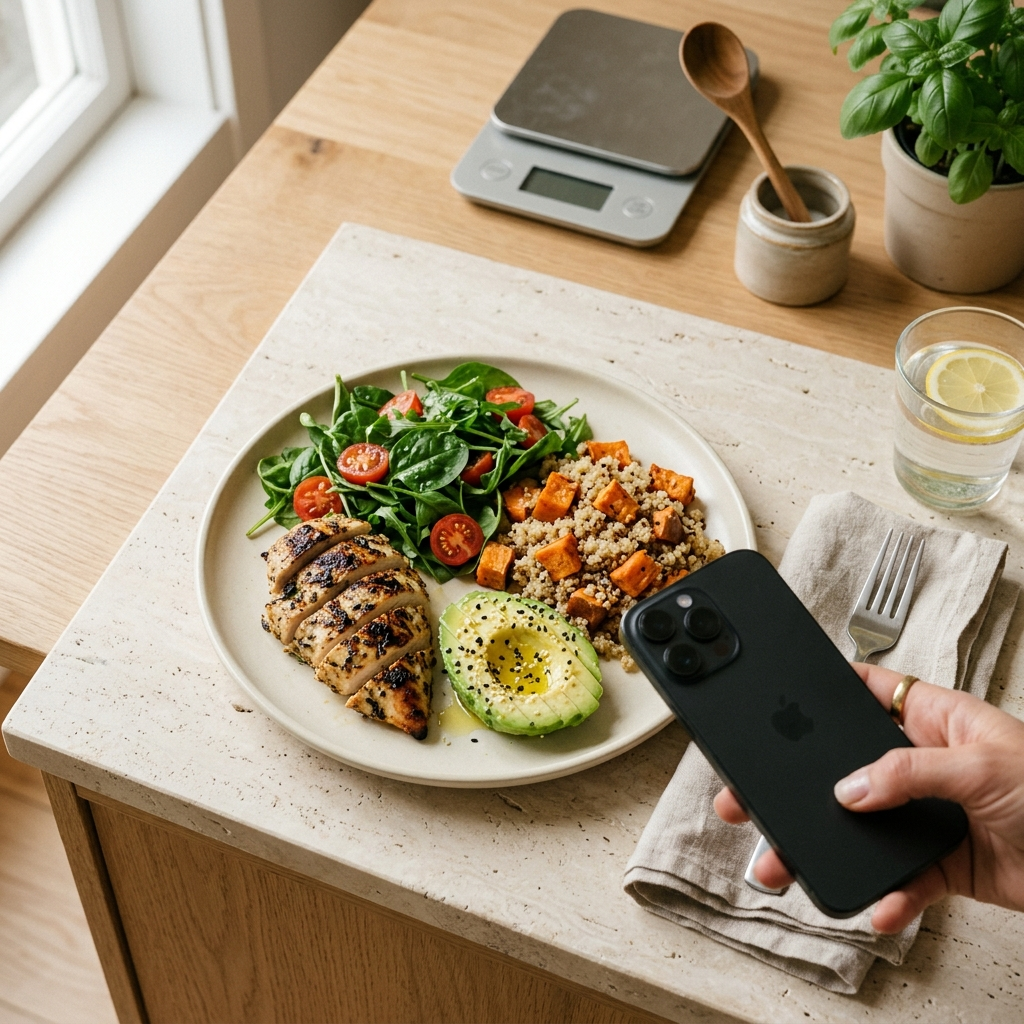
Manual data entry remains the main obstacle to consistent tracking. Recent advances in computer vision have introduced tools that replace manual search with photo capture.
Visual capture applications segment meal components, estimate portion volumes, and return approximate nutrient values within seconds. While gram scales remain essential for clinical precision, visual estimation provides sufficient reliability for body composition goals.
- Time savings: Logging takes seconds per meal instead of minutes of manual searching.
- Reduced decision fatigue: Eliminates the need to sift through competing user-submitted database entries.
- Consistent longitudinal data: Lower daily friction leads to fewer untracked meals and weekend logging lapses.
Key takeaway: Lowering data-entry friction improves tracking consistency, which often provides more practical utility than theoretical decimal-level accuracy.
How to Choose the Right Tracking System
Before switching platforms, evaluate your priorities against three core criteria:
- Determine your coaching requirements: If you already have established caloric targets and macronutrient distributions, automated weekly target adjustments are unnecessary.
- Audit your meal composition: Diets composed of simple, whole foods benefit most from rapid visual or predictive entry, whereas frequent dining out requires comprehensive restaurant databases.
- Measure your daily administrative threshold: Determine how much time you can realistically spend logging meals each day without compromising long-term consistency.
Key takeaway: Choose a tool that fits your operational tolerance rather than one with features you are unlikely to maintain.
Audit Checklist: Transitioning Away from Carbon
To switch from Carbon Diet Coach to a speed-focused tracking platform, follow this transition process:
- Export your baseline metrics: Record your current daily caloric average, target macronutrient breakdown, and 30-day weight trend from Carbon.
- Set fixed targets: Enter your established targets into the new platform to prevent unwanted initial adjustments.
- Calibrate portion estimates: Cross-reference automated or visual estimates with a kitchen scale for three to five days to evaluate accuracy across typical serving sizes.
- Establish a logging routine: Log meals immediately after preparation or consumption rather than deferring entries to the end of the day.
Key takeaway: Setting stable baseline parameters ensures continuity in body composition tracking during platform transitions.
Conclusion
Carbon Diet Coach serves users who require structured algorithmic guidance and accountability. However, for those constrained primarily by logging time, modern tools prioritize speed over rigid compliance models. For users seeking to reduce administrative overhead, Food Ai provides a streamlined alternative by using automated image analysis to capture meals quickly and support consistent daily adherence.
Frequently Asked Questions
Carbon Diet Coach requires precise manual logging to feed its weekly algorithmic adjustments. Users seek alternatives when detailed data entry creates unnecessary friction or when they already have established targets and only need efficient daily logging.
Visual food recognition reliably estimates total calories and macronutrient distributions for standard single-ingredient and mixed meals. However, complex recipes with hidden cooking oils or proprietary sauces may require minor manual adjustments for precision.
Dynamic coaching platforms adjust calorie and macronutrient targets weekly based on weigh-ins and compliance data. Rapid logging tools focus on minimizing input friction, leaving target adjustments under the user's direct control.