Why Are My Pothos Leaves Turning Yellow with Spots? Causes and Solutions
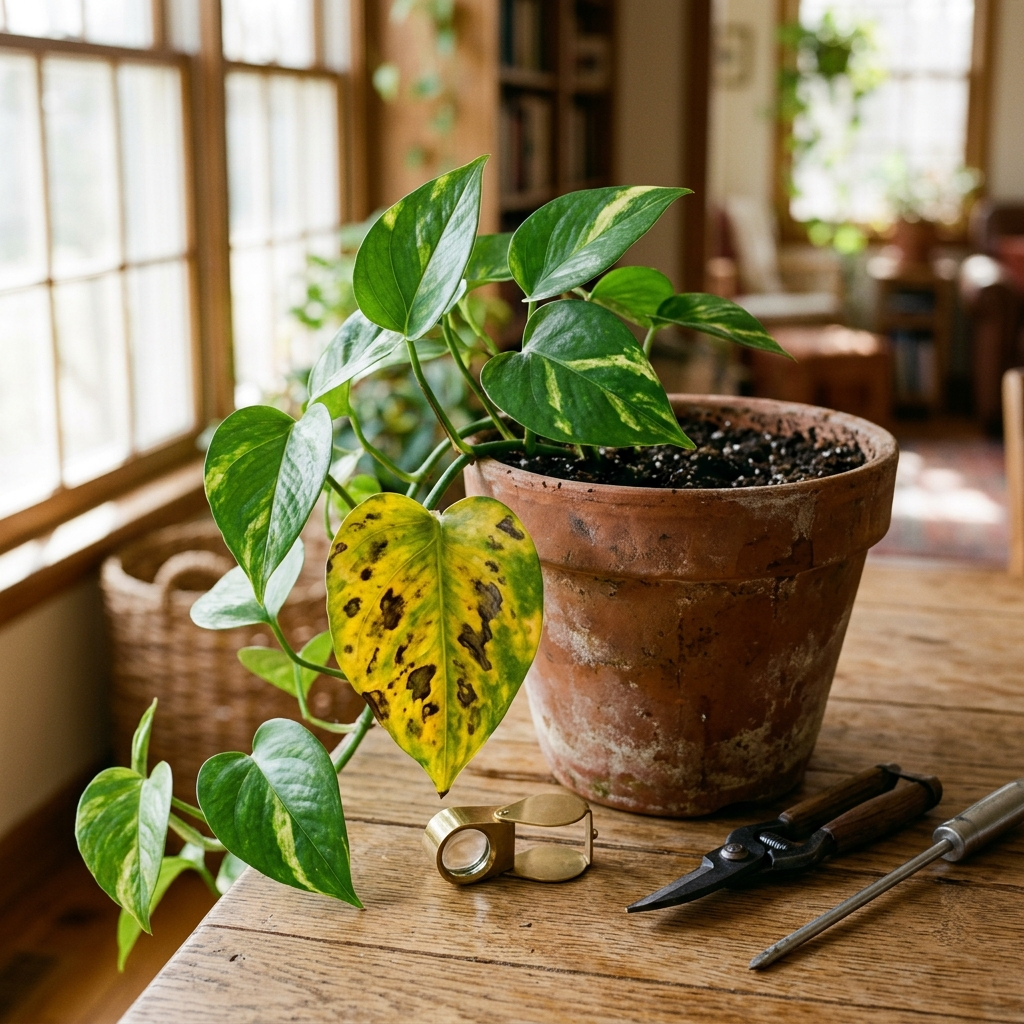
Pothos leaves turn yellow with spots primarily due to fungal or bacterial infections, sap-sucking pests, or overwatering that leads to root damage. Pinpointing the pattern, texture, and location of these spots is essential to choosing the correct treatment.
The Problem: Why Spotting and Chlorosis Require Immediate Action
Golden Pothos (Epipremnum aureum) is known for its hardiness, which sometimes causes plant owners to overlook early warning signs. While an isolated yellow leaf usually points to routine aging or minor moisture changes, yellowing paired with distinct spots indicates tissue damage, disease, or active pests that can spread along the vine.
Leaving these symptoms unchecked can lead to leaf loss and weakened roots. Early intervention helps isolate infectious problems, such as bacterial leaf spot, before they spread to nearby houseplants.
1. Fungal and Bacterial Leaf Spot Diseases
Pathogens are a frequent cause of speckled, yellowing foliage. Fungal leaf spots typically appear as circular or irregular brown blemishes bordered by a distinct yellow ring (chlorotic halo). Bacterial leaf spots, by contrast, often look like dark, water-soaked patches that feel soft and spread quickly in humid, still air.
Both types of pathogens thrive when water sits on leaves for prolonged periods. Spores and bacteria spread readily through overhead watering, misting, or unsterilized pruning shears.
- Fungal indicators: Dry, concentric rings with defined yellow borders, often appearing first on older or lower leaves.
- Bacterial indicators: Rapidly enlarging, water-soaked lesions that darken to deep brown or black.
- Immediate action: Stop misting the foliage and prune heavily infected leaves at the base of the stem using clean shears.
2. Pest Damage: Sap-Feeding Insects
Common indoor pests pierce leaf tissue to feed on sap. This causes stippling—a pattern of tiny yellow or pale speckles across the leaf. As feeding continues, the surrounding tissue loses chlorophyll and turns entirely yellow.
Typical pests include spider mites, thrips, and scale. Spider mites produce fine webbing and pale speckling on leaf undersides. Thrips leave behind silvery patches accompanied by tiny black specks of waste. Scale insects appear as small, immobile, waxy bumps that cause localized yellowing where they attach.
- Inspect the leaf undersides: Check the undersides of spotted leaves under good lighting.
- Perform a wipe test: Gently wipe a damp white cloth or paper towel along the underside; reddish or brown streaks often confirm spider mites.
- Rinse the plant: Wash the vines under lukewarm water to dislodge active pests.
- Apply horticultural treatment: Spray both sides of the leaves thoroughly with insecticidal soap or neem oil diluted according to the product label.
3. Overwatering and Early-Stage Root Rot
Chronic overwatering reduces oxygen in the potting mix, causing root decline and encouraging fungal pathogens in the soil. When root function is impaired, the plant cannot properly take up water or nutrients, leading to irregular brown patches surrounded by yellow halos on older foliage.
Moisture balance is critical for pothos. While underwatered leaves wilt and soften, overwatered leaves often stay relatively firm even as they turn yellow and develop dark, damp-looking lesions.
- Check soil moisture: Determine whether the lower half of the pot remains saturated more than a week after watering.
- Inspect for odor: A sour smell from the drainage holes indicates poor aeration and possible root decay.
- Corrective step: Allow the top 2 to 3 inches of potting mix to dry out before watering again, and ensure the pot drains freely.
4. Fertilizer Burn and Micronutrient Imbalances
Nutrient problems create distinct spotting patterns that differ from biological infections. Over-fertilizing causes mineral salts to accumulate in the soil, which can damage roots and cause browned tips, yellow margins, and scattered speckling. On the other hand, deficiencies in micronutrients like magnesium can cause yellowing between the veins alongside small brown specks.
Pothos do not require heavy feeding indoors, especially during autumn and winter when growth naturally slows.
- Flush the soil: Run lukewarm tap water slowly through the pot for several minutes to leach out excess fertilizer salts.
- Dilute fertilizer: Feed with a balanced houseplant fertilizer diluted to half or quarter strength.
- Pause feeding off-season: Hold off on fertilizer when the plant is not actively growing.
Diagnostic Checklist for Spotted Pothos Leaves
Determining the cause of leaf spotting requires checking several growing conditions. Work through these steps before applying treatments:
- Examine spot characteristics: Water-soaked areas suggest bacteria; dry rings with yellow halos suggest fungus; fine, scattered speckles suggest pests.
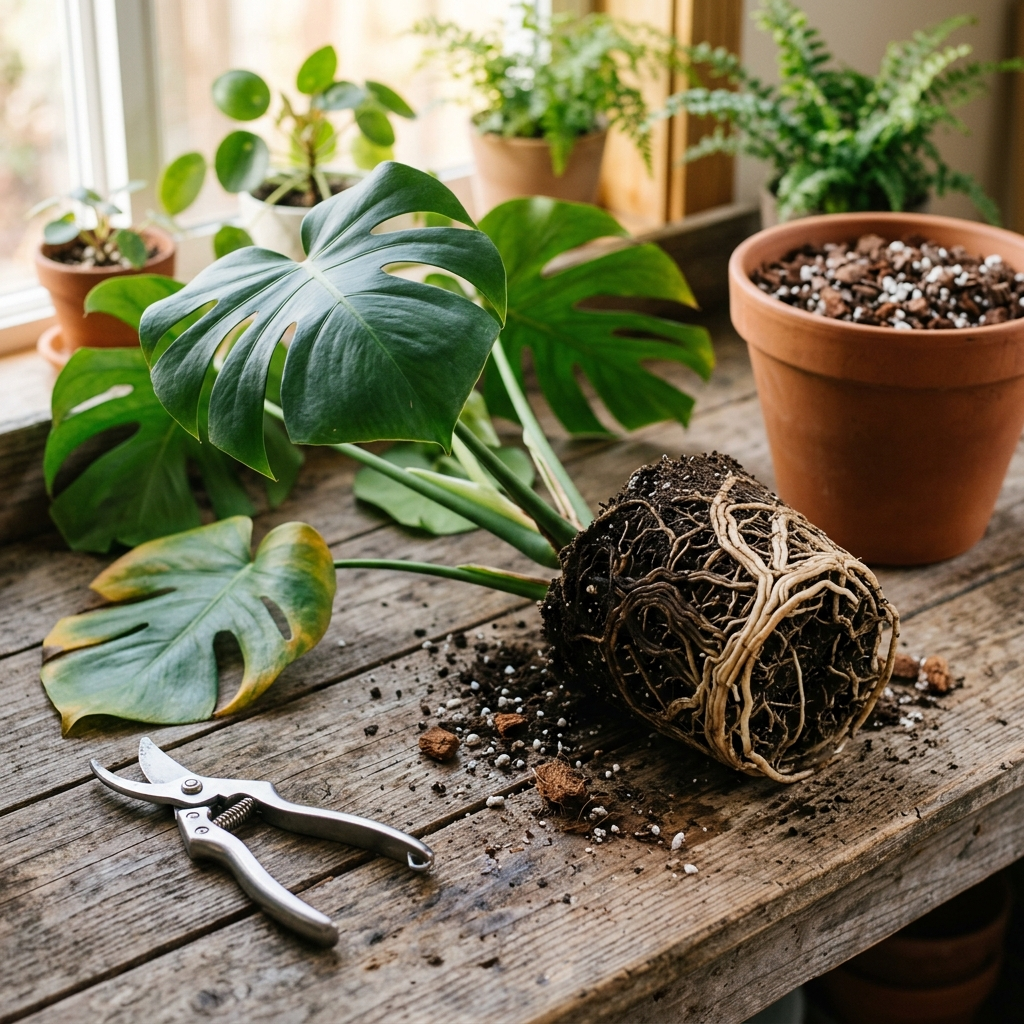
- Check root health: Carefully loosen the plant from its container; healthy roots are firm and pale, while damaged roots appear dark, soft, or stringy.
- Assess lighting: Keep pothos in medium to bright indirect light to support healthy growth and help soil dry at a steady rate.
- Evaluate watering habits: Water thoroughly only after the upper layer of soil has dried, and always empty excess water from saucers or drip trays.
Leveraging AI Diagnosis for Precise Identification
Because fungal spots, nutrient stress, and pest damage can share similar visual traits, confirming the issue can be challenging. Home gardeners looking for guidance can use Plant Doctor: Plant Care. By taking a clear photo of your pothos leaf, the app identifies the plant, diagnoses diseases, pests, nutrient deficiencies, or environmental stress, and provides step-by-step treatment and care advice.
For the most accurate result, take the photo in bright, indirect light, capturing both the spotted leaf surface and the underside. Plant Doctor includes a daily free diagnosis allowance, as well as a PRO upgrade that removes ads and unlocks unlimited diagnoses.
Conclusion
Yellow pothos leaves with spots point to identifiable stress—most commonly fungal or bacterial issues, pests, or saturated soil. Isolating the plant, trimming damaged foliage, adjusting your watering routine, and confirming the diagnosis will help your pothos return to healthy growth.
Frequently Asked Questions
Yes. Leaves with severe damage or signs of active fungal or bacterial infection should be removed. Use clean pruning shears to cut the stem at its base to keep the issue from spreading to healthy leaves.
Yes. Direct, intense sunlight can scorch foliage, creating bleached yellow or brown patches. Pothos grows best in moderate to bright indirect light.
Fungal spots are typically distinct brown lesions often bordered by a yellow halo. Pest damage usually appears as fine, scattered yellow stippling and may be accompanied by fine webbing, sticky residue, or visible insects on the undersides of leaves.