How to Identify and Treat Root Rot in Monsteras: A Practical Recovery Guide
Root rot in monsteras occurs when saturated soil deprives roots of oxygen, allowing opportunistic fungi such as Pythium and Phytophthora to damage root tissue. Treating root rot requires unpotting the plant, trimming blackened or mushy roots with sterilized tools, rinsing the remaining root system with diluted hydrogen peroxide, and repotting into an airy, well-draining potting mix. When addressed before stem tissue rots, monsteras can regrow a healthy root system within several weeks.
The Critical Impact of Subsurface Decay
Monstera deliciosa and Monstera adansonii are native to tropical rainforests, where they grow as hemiepiphytes on trees. Their root systems need both oxygen and moisture. In containers with poor drainage or dense potting soil, excess water fills the soil pores and suffocates roots.
Because early damage happens below the soil surface, growers often mistake early root rot for underwatering or nutrient deficiency. Adding water accelerates root death and spreads fungal spores through the pot. Detecting root decay early prevents irreversible damage to the plant's vascular system.
Early Warning Signs vs. Advanced Symptoms
Identifying symptoms early allows you to act while healthy root tissue remains. Foliage changes usually reflect the roots' reduced capacity to transport water and nutrients.
Foliar and Soil Indicators
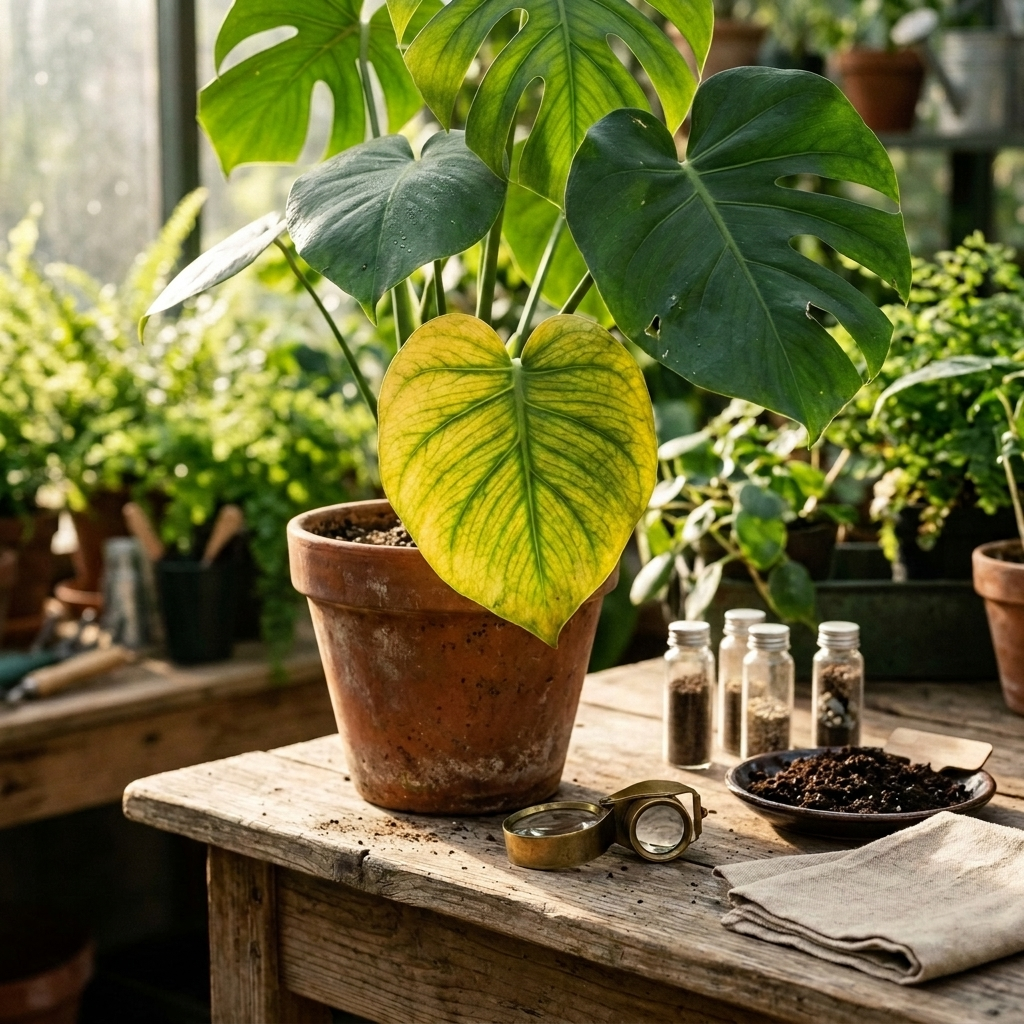
- Yellowing lower leaves: Older foliage near the base turns pale yellow and feels limp rather than dry or crisp.
- Dark, water-soaked leaf lesions: Irregular brown or black spots with yellow halos form on leaf surfaces.
- Soil moisture stagnation: Potting soil remains wet for several days after watering, indicating that root uptake has stopped.
- Foul container odor: A sour or sulfurous smell emerges from the drainage holes due to anaerobic decomposition.
- Systemic wilting: Stems and leaves droop despite moist soil because damaged roots cannot absorb water.
If you notice suspicious spots, take a clear, well-lit photo of the foliage using Plant Doctor: Plant Care. The app analyzes leaf symptoms to help distinguish environmental stress and fungal issues from pest damage, giving you practical guidance before you unpot the plant.
Step-by-Step Diagnostic Inspection of the Root System
A confirmed diagnosis requires examining the roots directly. Work in a clean area with adequate space to minimize stress on the plant.
- Gently extract the plant: Tip the pot sideways while supporting the base of the main stem. Tap the exterior of the container to loosen the root ball without pulling on the leaf stems.
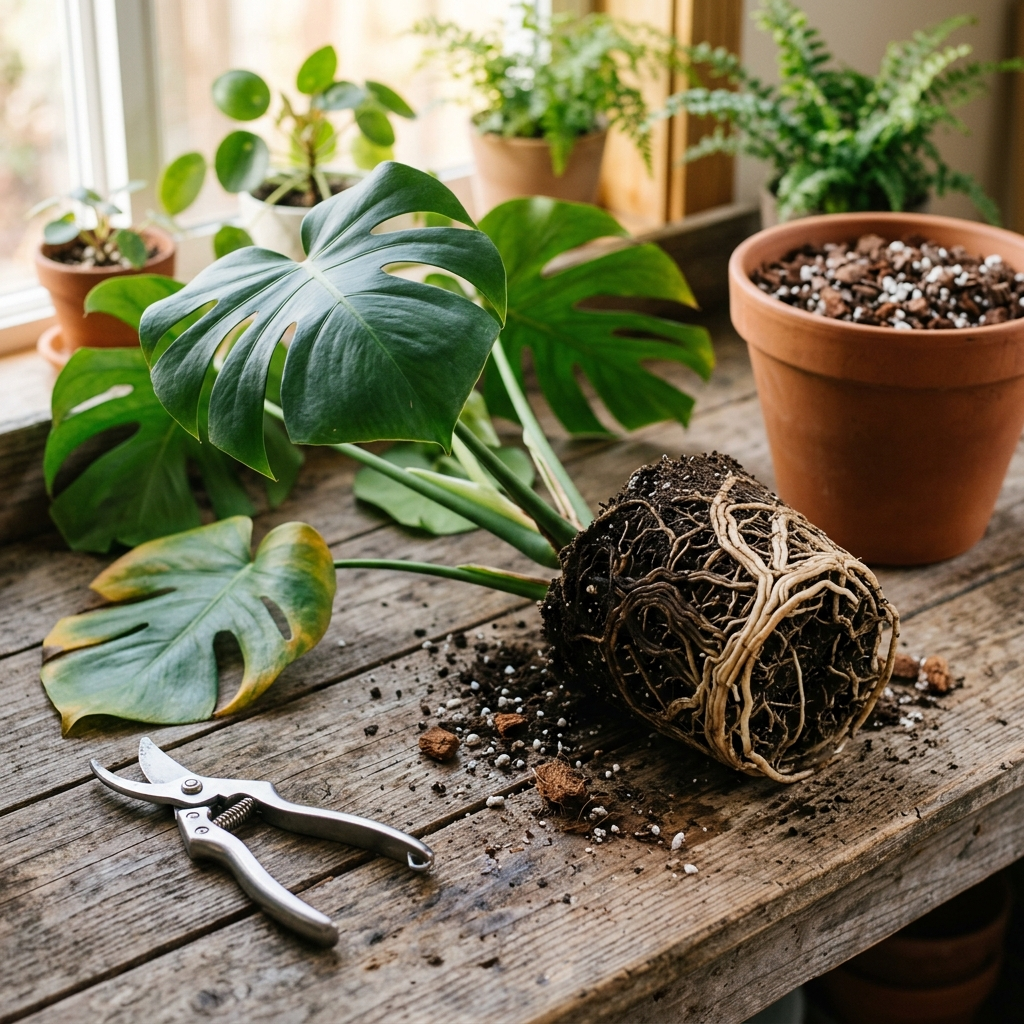
- Remove old substrate: Loosen compacted soil with your fingers or a soft brush. Rinse the remaining root system under lukewarm running tap water until individual roots are visible.
- Inspect texture and color: Healthy monstera roots are firm, pliable, and pale tan, white, or cream. Rotted roots are dark brown or black, feel mushy or hollow, and slough off easily, leaving a thin, stringy inner core.
Documenting root and leaf conditions over time helps establish a more reliable watering schedule and prevents recurrent moisture stress.
Surgical Treatment and Root Decontamination
Treating root rot requires removing all decayed tissue. Leaving rotten roots in place allows fungal pathogens to spread to new growth.
- Sterilize cutting instruments: Wipe pruners or shears with 70% isopropyl alcohol or a 10% bleach solution before and between cuts.
- Excise all necrotic tissue: Cut affected roots back to firm, healthy tissue with a pale cross-section. Remove as much damaged root mass as necessary.
- Prune matching foliage: If you must remove more than one-third of the root system, trim an equivalent portion of damaged lower leaves to lower transpirational demand.
- Apply an antiseptic wash: Soak the remaining roots for five minutes in a solution of one part 3% household hydrogen peroxide to three parts water to clean the tissue and eliminate residual fungal spores.
Let the treated root mass air-dry on clean paper towels for about 30 minutes before repotting so the cut ends can dry slightly.
Substrate Selection and Repotting Protocol
Replanting a monstera into standard potting soil after root rot often leads to reinfection. Monsteras require an open, coarse mix that drains quickly while retaining light moisture around the roots.
The Optimal Aroid Soil Formulation
- Two parts orchid bark: Coarse pine or fir bark provides structure and prevents compaction.
- One part coarse perlite or pumice: Promotes aeration and keeps water from accumulating at the base of the container.
- One part coco coir or peat moss: Retains moderate moisture without waterlogging the root zone.
- One-half part horticultural charcoal: Helps absorb impurities and maintain mix porosity.
Choose a clean container sized to the remaining root ball, leaving one to two inches of space around the root system. Oversized pots hold excess moisture that reduced root systems cannot process. Ensure the pot has functional drainage holes.
Post-Treatment Care and Long-Term Prevention
The first month after repotting is essential for recovery. The plant needs stable conditions while it regenerates root tissue.
- Withhold fertilizer: Do not apply liquid fertilizer for at least six weeks after repotting; mineral salts can damage delicate new root tips.
- Optimize light exposure: Place the plant in bright, indirect light to support photosynthesis without scorching stressed foliage.
- Adjust irrigation technique: Water thoroughly only after the top two to three inches of soil feel dry, and empty drainage saucers promptly after watering.
- Maintain stable ambient humidity: Keep relative humidity around 50% to 60% and room temperatures between 68°F and 80°F (20°C to 27°C).
During recovery, use Plant Doctor: Plant Care to track foliage health. The daily free diagnosis allowance lets you monitor new growth, while the PRO upgrade removes ads and provides unlimited diagnoses to assist with ongoing plant care.