How to Diagnose Sick Tomato Plants by Photo: A Practical Guide
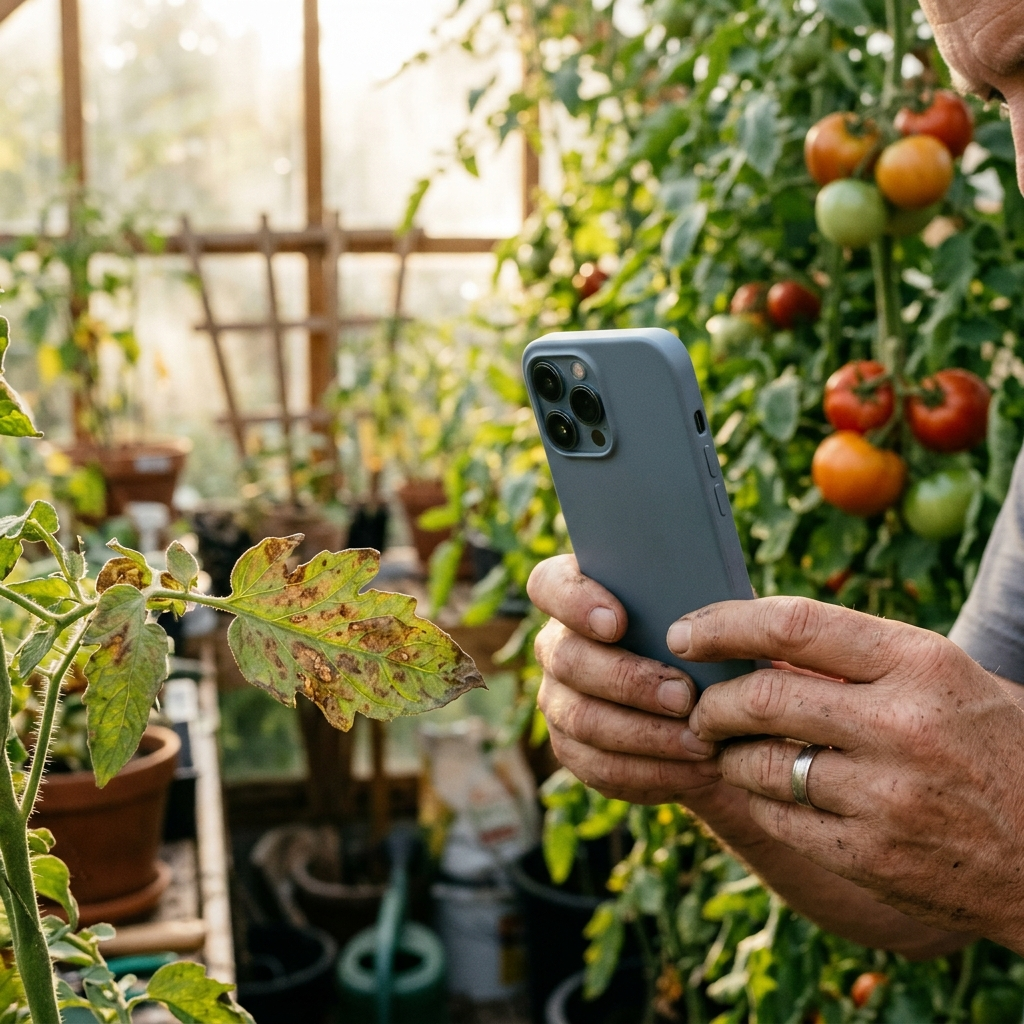
Diagnosing sick tomato plants by photo requires capturing focused, well-lit images of key symptom zones—such as leaf lesions, stem discoloration, or fruit rot—and evaluating them against common patterns of disease, pests, and nutrient deficiencies. Using an AI-powered diagnostic tool like Plant Doctor: Plant Care allows gardeners to submit photos for automated pattern recognition, receiving targeted identification and actionable management steps within seconds.
Why Early Image-Based Diagnosis Matters for Tomato Crops
Tomato plants (Solanum lycopersicum) are susceptible to a wide spectrum of foliar pathogens, physiological disorders, and insect pests. Because distinct conditions often present with overlapping visual markers—such as yellowing foliage or localized tissue necrosis—misidentification frequently leads gardeners to apply inappropriate treatments, such as spraying synthetic fungicides to address a simple nitrogen deficiency.
Catching symptoms early through photographic analysis prevents localized issues from spreading throughout garden beds. Photographic records document symptom progression, helping growers distinguish routine environmental stress from fast-moving fungal pathogens before defoliation occurs.
Takeaway: Prompt photographic documentation identifies the root cause of plant decline before incorrect interventions cause further damage.
How to Photograph Tomato Plants for Accurate Assessment
Automated diagnostic tools rely directly on the visual quality of the input image. Low lighting, motion blur, and wide-angle garden shots obscure critical details needed to distinguish conditions such as early blight from Septoria leaf spot.
To obtain reliable results, apply standard photography practices before submitting an image to Plant Doctor: Plant Care:
- Use natural, indirect daylight: Harsh midday sun creates harsh highlights and shadows that mask subtle leaf margins. Overcast mornings or late afternoons offer balanced illumination across the foliage.
- Capture both sides of symptomatic foliage: Fungal spores and insect pests, such as spider mites and whiteflies, frequently colonize leaf undersides. Turn the leaf over to photograph both surfaces clearly.
- Frame the boundary between healthy and affected tissue: Focusing solely on dead tissue provides limited diagnostic value. Frame the margin where symptomatic tissue transitions into healthy green growth.
- Keep the lens steady and parallel: Hold the camera directly facing the leaf surface rather than at an angle to maintain uniform focus across the entire subject.
Takeaway: Sharp, well-lit images showing the margin between healthy and symptomatic tissue yield the most accurate diagnostic results.
Differentiating Common Tomato Foliar Diseases
Foliar pathogens are among the most common reasons home growers seek image-based diagnoses. Identifying the specific pattern of leaf spotting determines whether cultural pruning, targeted sprays, or plant removal is appropriate.
Early Blight versus Late Blight
Early blight (caused by Alternaria solani) typically begins on lower, older leaves as brown or black spots surrounded by concentric rings in a target-like pattern. Surrounding tissue often yellows before dying. Late blight (Phytophthora infestans) progresses rapidly in cool, damp conditions, forming large, water-soaked lesions that turn dark brown or purplish-black, accompanied by white fungal growth on leaf undersides in high humidity.
Septoria Leaf Spot
Septoria leaf spot (Septoria lycopersici) produces numerous small, circular spots with dark brown margins and light gray or tan centers. Unlike early blight, these lesions rarely show concentric rings and remain small, though severe infections cause rapid lower-leaf drop.
Takeaway: Concentric target rings indicate early blight, irregular water-soaked blotches signal late blight, and small gray-centered spots point to Septoria leaf spot.
Distinguishing Nutrient Deficiencies from Pathogen Damage
Not all yellowing indicates an active infection. Nutrient deficiencies typically create symmetrical, plant-wide patterns, whereas pathogen infections appear irregularly on scattered leaves.
- Nitrogen deficiency: Produces uniform yellowing (chlorosis) that starts on the oldest lower leaves and gradually progresses upward. Veins and surrounding tissue yellow evenly without necrotic spots.
- Magnesium deficiency: Causes interveinal chlorosis on mature leaves, where the leaf blade yellows while the primary veins remain green.
- Blossom end rot: Characterized by a dark, sunken, leathery lesion on the blossom end of the fruit. This physiological condition results from inadequate calcium uptake, often caused by irregular soil moisture rather than a lack of calcium in the soil.
Plant Doctor: Plant Care evaluates these visual patterns to help home gardeners differentiate nutritional imbalances from infectious diseases.
Takeaway: Symmetrical color changes across broad leaf areas generally indicate nutritional or environmental stress, whereas irregular spots and blotches suggest pathogens.
Step-by-Step Workflow: Diagnosing with Plant Doctor: Plant Care
Digital diagnostic tools streamline plant health management. The Plant Doctor: Plant Care app guides gardeners through a structured diagnostic workflow:
- Inspect the plant: Identify the symptomatic area, whether on new growth, lower foliage, stems, or developing fruit.
- Open Plant Doctor: Plant Care: Open the camera interface and use the in-app photo tips to frame and focus on the affected foliage or lesion.
- Review the diagnosis: The app identifies the plant, checks for pests, diseases, nutrient deficiencies, and environmental stress, and displays findings within seconds. Users can utilize their daily free diagnosis allowance or access unlimited diagnoses with the PRO upgrade.
- Follow the treatment steps: Implement the recommended management steps, such as modifying watering schedules, removing diseased foliage, or applying targeted treatments.
Takeaway: Combining careful photography with automated diagnostic software reduces guesswork and supports timely intervention.
Conclusion
Diagnosing sick tomato plants by photo simplifies plant pathology for home gardeners. Capturing clear images of symptom margins and recognizing key differences between fungal lesions, pest activity, and nutritional chlorosis helps growers safeguard their harvest. Download Plant Doctor: Plant Care to photograph your garden plants and receive step-by-step treatment guidance.