How to Track Calories When Dining at Restaurants
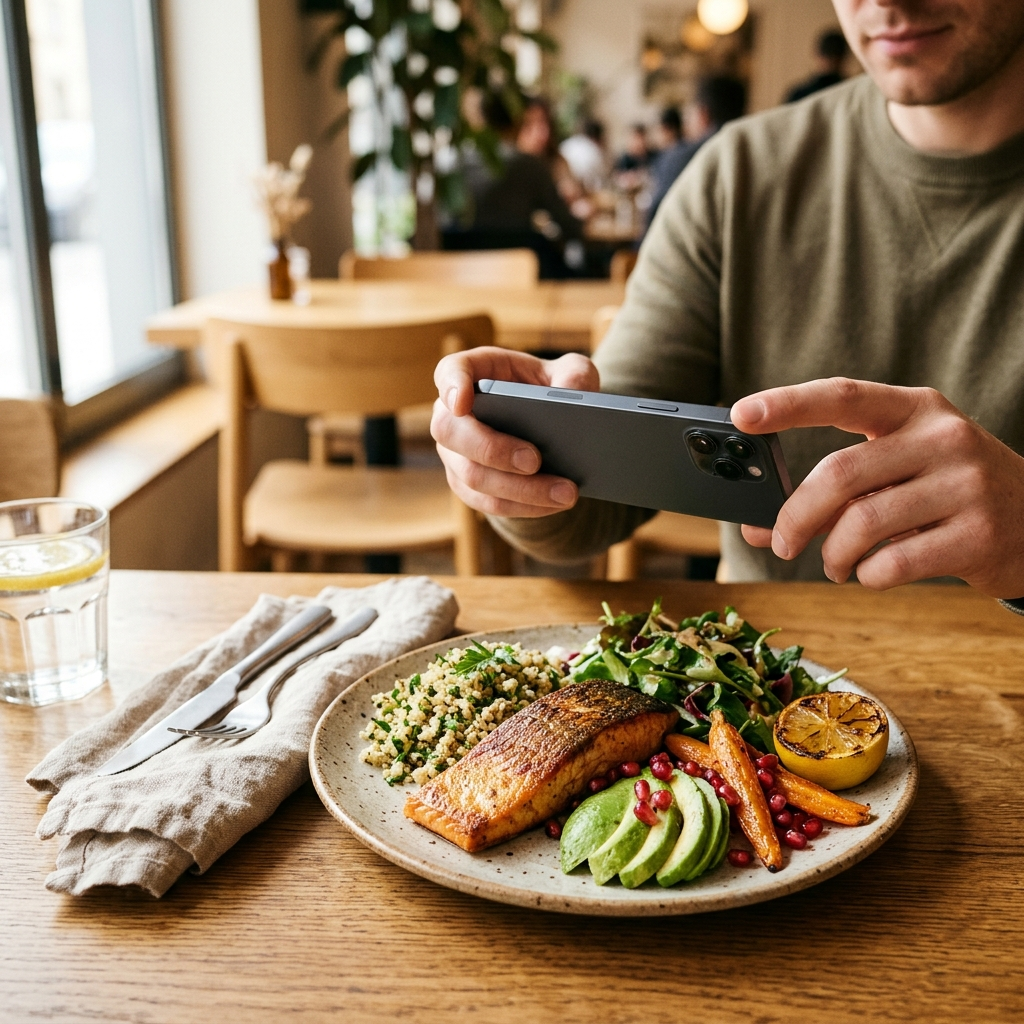
Tracking calories at restaurants requires identifying hidden cooking fats, assessing portion sizes, and breaking complex dishes into their core ingredients. Laboratory precision is unnecessary; consistent estimation keeps your daily energy and macronutrient budget on track.
The Core Challenges of Dining Out
Restaurant meals rarely match standard food database entries. Commercial kitchens prioritize flavor over nutritional targets, frequently incorporating butter, cream, and finishing oils. For example, a plain chicken breast cooked at home contains around 165 calories, whereas a restaurant preparation can exceed 350 calories due to pan-frying and basting.
Portion distortion creates a second hurdle. Standard servings are often doubled or tripled on restaurant dinnerware. During social dining, attention shifts away from visual cues, making retrospective manual logging prone to underreporting.
Recognizing these factors helps you plan an approach before eating, preserving your daily calorie target while dining out.
Deconstructing Menu Items into Core Components
When nutritional information is unavailable, avoid logging an aggregate dish name. Entries such as "chicken skillet" or "seafood pasta" vary significantly between kitchens. Instead, break the meal into four distinct components:
- Protein source: Identify the cut and estimated portion (such as a salmon fillet, sirloin steak, or grilled chicken breast).
- Primary carbohydrate: Measure starches separately, including rice, potatoes, or pasta.
- Vegetables: Note the volume of greens, steamed vegetables, or raw produce.
- Added fats: Identify dressings, sauces, gravies, cheese, and butter.
Logging each item separately yields a more reliable estimate than selecting a generic database entry.
Streamlining Entries with Visual AI and Foodly
Manually entering individual ingredients during a meal can be inconvenient. Using Foodly: Calorie & Macro Log simplifies the logging process. Foodly analyzes a photo of your meal to identify components and estimate portion sizes automatically.
Because presentation styles vary, Foodly provides a confidence score with its estimates, indicating the system's certainty for each identified item.
If a dish contains extra sauce or oil that was not detected, use the manual override feature to adjust portion estimates or update specific ingredients directly.
Accounting for Hidden Preparation Fats
Cooking fats represent the largest source of unrecorded calories in restaurant meals. Kitchens frequently finish meats with butter and toss roasted vegetables with oil.
Apply these baseline adjustments to maintain accuracy:
- Sautéed or pan-seared dishes: Add 1 tablespoon (14 grams) of cooking oil, which contributes roughly 120 calories of fat.
- Roasted vegetables: Add 1 teaspoon to 1 tablespoon of oil per cup, depending on visible sheen.
- Dressings and sauces: Order dressings on the side. A standard two-ounce ramekin contains about four tablespoons, totaling 250 to 350 calories.
- Cream-based sauces and soups: Calculate entries using heavy cream and butter bases rather than milk or stock.
Factoring in these preparation methods addresses the most common logging discrepancies.
Navigating the Dashboard and Weekly Budget
Evaluate restaurant meals within your broader nutritional goals. The Foodly dashboard displays daily calorie intake alongside macronutrient targets for protein, carbohydrates, and fats.
If a higher-calorie restaurant meal causes you to exceed your daily target, consult your weekly trend analysis. Body composition shifts reflect multi-day energy balances rather than single meals.
Monitoring macro distributions and weekly trends on the dashboard allows you to balance intake across subsequent days without extreme dietary restrictions.
Practical Checklist for Dining Out
Use this reference when eating out:
- Review the menu in advance: Select protein-centered dishes prepared by grilling, broiling, or steaming.
- Photograph the meal promptly: Take a photo in Foodly as soon as the food arrives.
- Request sauces on the side: Keep gravies, dressings, and compound butters separate to regulate portion sizes.
- Review the confidence score: Check Foodly's detected portions and use manual override if adjustments are needed.
- Include beverages in your log: Account for specialty coffees, alcoholic drinks, and sweetened beverages.
Conclusion
Dining out does not require abandoning nutritional tracking. By deconstructing meals, accounting for preparation oils, and using Foodly's photo recognition and dashboard analytics, you can log restaurant meals reliably and maintain consistent progress.
Frequently Asked Questions
Add one tablespoon of cooking oil (approximately 120 calories and 14 grams of fat) to your entry for pan-seared, roasted, or sautéed restaurant items.
Logging before eating or taking a photo when the plate is served helps evaluate portion sizes against daily targets and reduces underreporting.
Use a photo recognition tool like Foodly to identify meal items, or break the dish down into its core components: protein, carbohydrate, vegetables, and added fats.
Consistent approximations within a reasonable margin are sufficient to support weekly calorie and macronutrient targets.