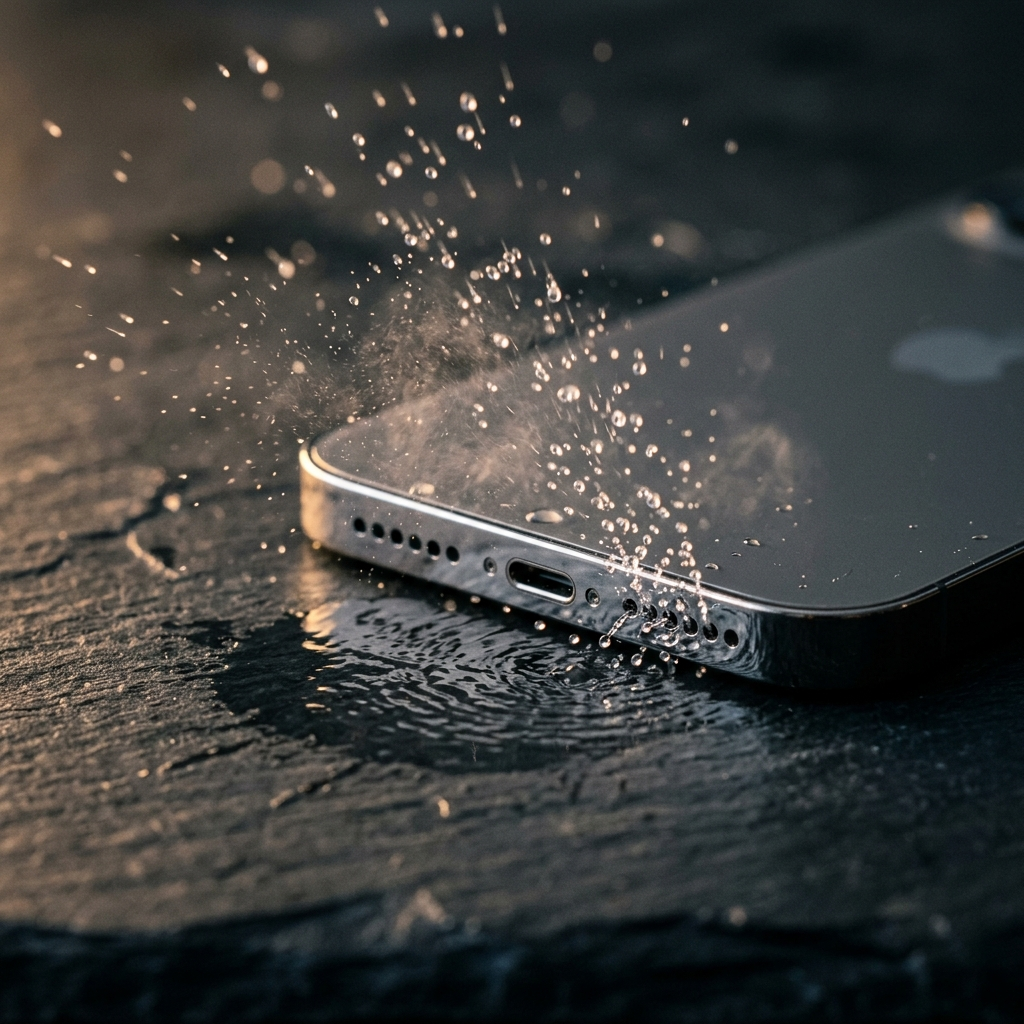
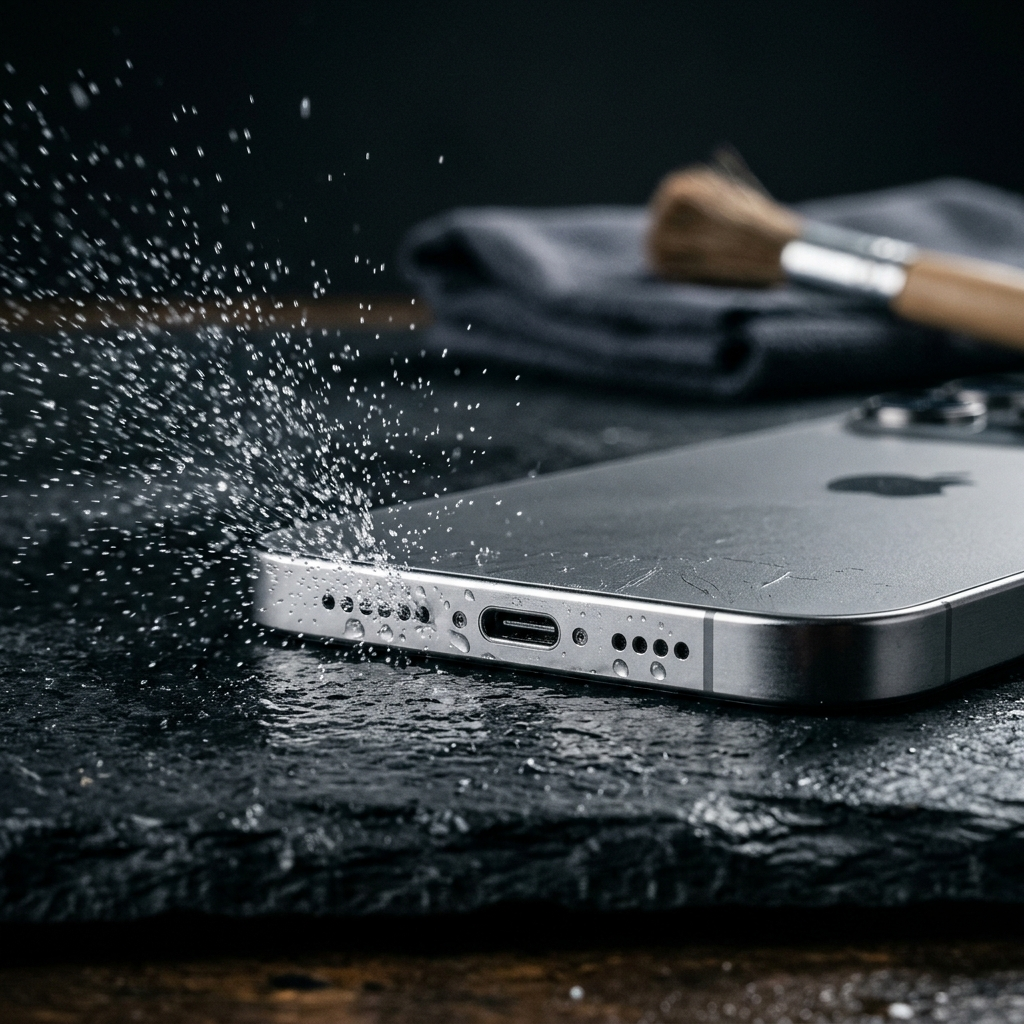
Best Clear Wave Alternative for Ejecting Water from Mobile Speakers
A practical alternative to Clear Wave for removing moisture from phone speakers is Speaker Cleaner, an app that plays loud, low-frequency sound waves around 165 Hz. These targeted vibrations physically oscillate the speaker diaphragm to help dislodge trapped water droplets and clear muffled audio without opening or modifying the hardware. For users seeking a straightforward acoustic solution, it provides the focused mechanical action required to clear trapped liquid.
Understanding Moisture Retention in Smartphone Speakers
Modern smartphones often carry water-resistance ratings such as IP67 or IP68. These ratings are designed to prevent liquid ingress into internal logic boards, but they do not stop water from entering exterior speaker cavities. When a phone is exposed to water, moisture can settle inside the speaker mesh and protective grille. Surface tension holds these small droplets in place, causing audio output to sound faint, distorted, or muffled.
Leaving trapped moisture in the speaker opening presents two problems. First, it dampens the physical movement of the speaker cone, reducing volume and clarity during calls and media playback. Second, dissolved minerals or debris left behind as the liquid evaporates can deposit onto the fine mesh, potentially causing lingering audio distortion.
Key takeaway: While water-resistance seals protect internal circuits, water trapped in external speaker cavities requires physical displacement to restore clear sound.
The Acoustic Science of Water Ejection: Why 165 Hz Matters
Users frequently turn to utilities like Clear Wave after an accidental splash, but the technique relies on straightforward acoustic physics. Sound waves are mechanical vibrations. When a mobile speaker transducer plays audio, its diaphragm moves rapidly back and forth, displacing surrounding air.
Typical audio playback—such as music, podcasts, or speech—features constantly changing frequencies and varying amplitudes that do not produce sustained physical displacement. By contrast, a utility like Speaker Cleaner outputs a continuous, low-frequency tone around 165 Hz. This low-frequency range causes pronounced physical excursion of the small speaker diaphragm.
At approximately 165 Hz, the continuous vibration works against the surface tension keeping droplets bonded to the mesh. The resulting air pulses push water outward through the grille, clearing the acoustic channel faster than passive air drying alone.
Key takeaway: Ejecting liquid acoustically requires sustained, low-frequency vibration rather than dynamic music playback.
Why Speaker Cleaner Serves as an Alternative
While Clear Wave is widely known for audio ejection, users looking for an alternative often want a simpler, direct tool focused specifically on acoustic clearing. Speaker Cleaner provides a dedicated option designed for this mechanical task.
- Targeted frequency: Speaker Cleaner outputs loud, low-frequency sound waves around 165 Hz to vibrate trapped liquid out of the speaker cavity.
- Dust removal: The physical vibrations generated by the low-frequency tones also help dislodge dry dust and particulate matter that accumulate on the speaker mesh.
- Direct interface: The app provides immediate access to the necessary tones without complicated setup steps.
- Controlled acoustic output: The tones are tuned to operate safely within the standard playback limits of mobile phone speakers.
Key takeaway: Speaker Cleaner provides the specific 165 Hz acoustic output needed to clear speaker grilles of water and dust.
Step-by-Step Protocol: Safely Clearing Trapped Speaker Liquid
To obtain the best results from an acoustic clearing cycle, orient the phone correctly while the sound plays:
- Dry the exterior: Gently wipe the phone frame, screen, and ports with a dry, lint-free cloth. Do not insert cloths, swabs, or paper towels into the speaker openings.
- Position the handset: Hold the device with the affected speaker grille facing downward toward a towel or cloth so gravity helps guide dislodged droplets out of the cavity.
- Set media volume: Turn the media volume up to provide sufficient cone vibration for clearing moisture.
- Run Speaker Cleaner: Play the 165 Hz tone in Speaker Cleaner while keeping the speaker directed downward.
- Inspect and repeat if necessary: Wipe away any expelled water droplets from the grille. If the sound remains muffled, run an additional cycle to clear remaining moisture.
Key takeaway: Point the speaker downward during playback so gravity assists the sound vibrations in pushing liquid out.
Common Methods to Avoid When Drying Mobile Speakers
When audio sounds distorted after water exposure, avoid common drying habits that can damage hardware:
- Do not use compressed air: Pressurized air can rupture delicate speaker membranes or force moisture past internal protective gaskets.
- Avoid uncooked rice: Rice does not reliably extract water from small enclosures, and its fine starch dust can enter ports and grilles, forming debris when mixed with moisture.
- Avoid heat sources: Do not use hair dryers, heat guns, or ovens. High heat can weaken speaker adhesives and damage the battery.
- Do not insert sharp or rigid tools: Poking pins, toothpicks, or needles into the speaker grille can puncture the acoustic mesh and compromise dust and water seals.
Key takeaway: Avoid compressed air, heat, and sharp objects, which can permanently damage speaker components.
Summary and Maintenance Best Practices
When moisture enters a phone's speaker grille, prompt action helps prevent persistent muffling and mineral buildup. Low-frequency acoustic tools offer a non-invasive way to dislodge trapped water using sound waves. As an alternative to Clear Wave, Speaker Cleaner focuses on playing loud sound waves around 165 Hz to loosen and expel liquid and dust from speaker openings. Keeping a dedicated cleaner tool ready ensures you can quickly clear your speakers after minor splashes or everyday debris accumulation.
Frequently Asked Questions
Low-frequency sound waves around 165 Hz cause the speaker diaphragm to vibrate with significant physical excursion. This movement creates localized air pressure pulses that overcome the surface tension of water droplets, pushing them outward through the speaker grille.
Yes. Speaker Cleaner uses acoustic tones designed to play within standard mobile speaker volume and frequency limits, generating the vibration needed to dislodge water and dust without damaging the speaker hardware.
Yes. The physical vibrations produced by the low-frequency sound waves help loosen dry dust and particulate matter from the speaker mesh.
Standard music contains shifting frequencies and dynamics that do not sustain continuous cone excursion. A steady, low-frequency tone near 165 Hz produces constant, focused vibration necessary to dislodge trapped liquid.