Why Pepper Plant Leaves Curl Up: Diagnostic Guide and Corrective Actions
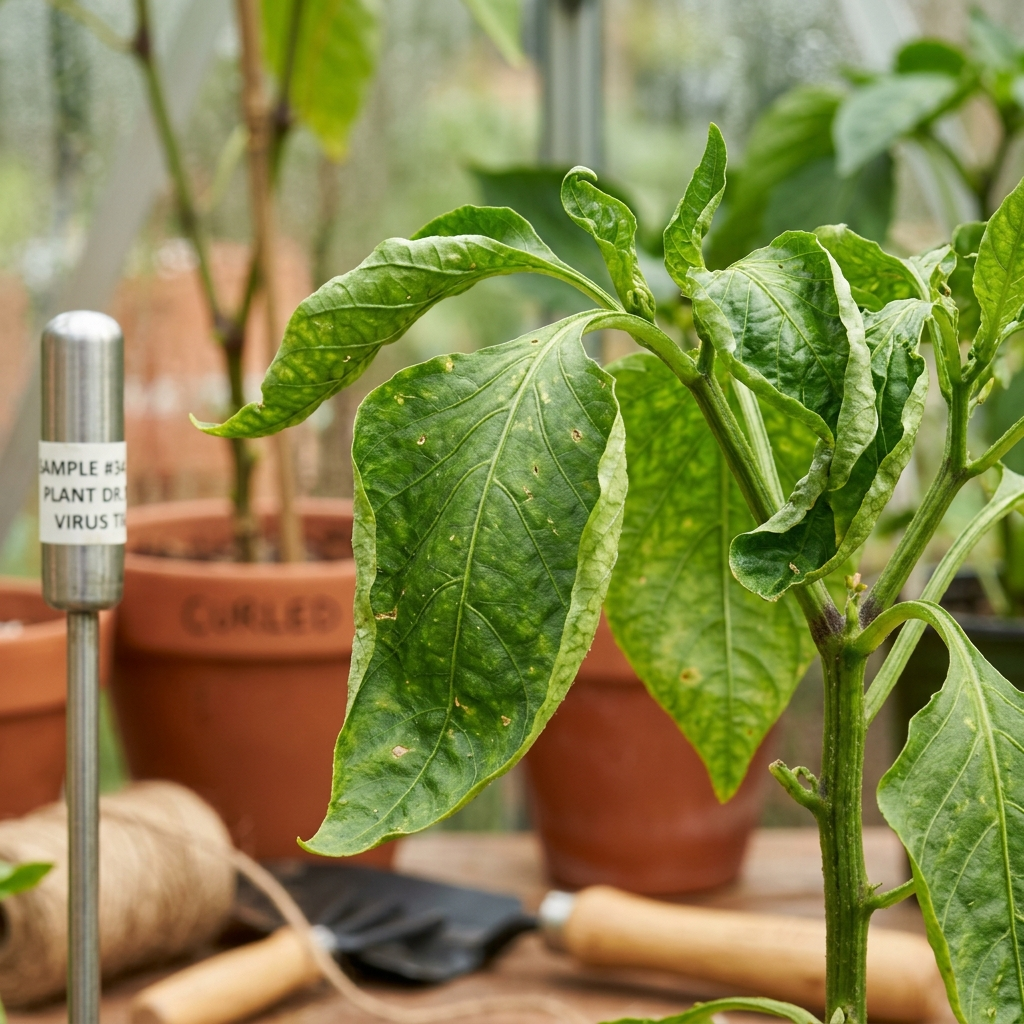
Pepper plant leaves curl upward primarily in response to abiotic stressors, including excessive heat, high vapor pressure deficits, and irregular irrigation. When leaf margins cup upward without chlorosis or tissue distortion, the plant is typically regulating transpiration to conserve moisture. Less commonly, upward curling results from localized calcium or boron deficiencies, broad mite feeding, or viral infections such as pepper leaf curl virus.
The Physiological Cost of Leaf Curling
Leaves function as the primary photosynthetic organs in pepper plants (Capsicum spp.). Upward curling reduces the surface area exposed to solar radiation, diminishing net photosynthetic rate and slowing vegetative development. Unmitigated curling during floral initiation and fruit set often triggers flower abscission and impedes fruit expansion.
Differentiating physiological (abiotic) disorders from biological (biotic) damage is critical. Inaccurate diagnosis frequently prompts improper interventions, such as applying broad-spectrum insecticides to foliage responding purely to thermal or evaporative stress.
1. Environmental Stress and Vapor Pressure Deficit (VPD)
While peppers are warm-season crops, ambient temperatures exceeding 90°F (32°C) paired with low relative humidity induce protective physiological responses. To restrict transpiration, leaf margins curl inward toward the central midrib, forming a distinct cup or trough.
High Heat and Direct Sun Exposure
High irradiance can heat leaf tissue faster than the root system can deliver water, even in moist substrates. Stomata close to prevent dehydration, prompting the margins to fold upward. This condition is confirmed if symptoms peak during midday heat and subside by early morning.
VPD Imbalance
In arid climates or controlled greenhouse environments, an elevated vapor pressure deficit—where ambient air is hot and dry relative to the leaf surface—drives excessive transpiration. The plant curls its foliage to maintain a humid boundary layer over the stomatal apertures.
- Corrective action: Deploy 30% shade cloth during peak summer solar radiation.
- Airflow management: In protected cultivation, maintain relative humidity between 50% and 70% to moderate transpiration rates.
- Takeaway: Uniform upward cupping across upper foliage during hot afternoons indicates abiotic stress rather than pathology.
2. Irrigation Imbalances: Under-Watering vs. Root Saturation
Peppers require uniform moisture in well-aerated, well-draining soil. Both drought and prolonged root saturation can trigger curling.
The Under-Watering Response
When soil moisture falls below threshold levels, cellular turgor drops. Leaves soften, lose elasticity, and curl upward along the margins prior to visible wilting. Moisture-deprived foliage typically feels papery and brittle.
Over-Watering and Hypoxia
Persistent saturation displaces soil oxygen, causing root hair senescence and functional root failure. Waterlogged plants mirror drought symptoms because damaged roots cannot absorb or translocate moisture and dissolved minerals. Over-watered peppers often exhibit upward cupping paired with diffuse chlorosis across mature lower leaves.
- Check soil depth: Inspect soil moisture 2 to 3 inches into the root zone before irrigating.
- Maintain drainage: Verify container-grown plants have unobstructed drainage ports and a porous, well-aerated substrate.
- Takeaway: Irrigate thoroughly only after the top 1 to 2 inches of soil have dried to preserve root zone gas exchange.
3. Nutrient Dynamics: Nitrogen and Calcium Imbalances
Soil nutrient availability dictates cell wall formation and leaf blade expansion. Specific mineral imbalances reliably alter foliar morphology.
Excessive Nitrogen
High concentrations of nitrate or ammoniacal nitrogen stimulate vegetative growth that outpaces structural cell wall development. Rapidly expanding epidermal cells can buckle, rolling margins inward or upward. The foliage characteristically develops a dark, glossy green hue.
Calcium Mobility Limitations
Calcium is an essential component of the plant cell wall and translocates strictly through the xylem via the transpiration stream. If transpiration stalls due to erratic irrigation or saturated humidity, young foliage suffers localized calcium deficiency. Symptoms include stunted, cupped, and deformed new leaves, frequently accompanied by marginal necrosis.
- Audit fertilization programs and taper nitrogen applications upon floral transition.
- Apply agricultural gypsum or a chelated calcium-magnesium amendment if soil tests confirm low calcium bioavailability.
- Maintain consistent irrigation intervals to ensure steady calcium translocation to the shoot apical meristem.
- Takeaway: Upward curling isolated to emerging growth points to poor calcium mobility; dark green foliage rolling along the margins indicates nitrogen toxicity.
4. Microscopic Pests: Broad Mites and Thrips
Arthropod feeding induces asymmetric leaf curling, surface puckering, and structural distortion. While aphids typically trigger downward curling, microscopic pests induce upward twisting and hardening.
Broad Mites (Polyphagotarsonemus latus)
Broad mites measure less than 0.2 millimeters and are invisible without magnification. When feeding on terminal shoots, they inject phytotoxic saliva that disrupts hormonal balance. Affected leaves emerge rigid, brittle, bronze-tinted, and tightly curled. Symptoms often mimic viral damage or synthetic auxin exposure.
Thrips Damage
Thrips feed on tender foliage by piercing epidermal cells and extracting cellular contents. Damaged leaf margins often curl upward, marked by silvery scarring and small, dark fecal deposits on abaxial leaf surfaces.
- Inspection: Examine the undersides of distorted terminal foliage using a 20x to 40x hand lens to identify translucent mites.
- Targeted treatment: Apply horticultural oils, insecticidal soaps, or wettable sulfur to lower leaf surfaces during cooler morning hours.
- Takeaway: Distorted, hardened, and upward-curled new growth warrants immediate inspection for microscopic mites.
Diagnostic Checklist for Curled Pepper Leaves
Review this troubleshooting protocol before applying chemical or cultural treatments:
- Assess leaf texture: Determine whether leaves are soft and flaccid (thermal stress or drought) or thickened, hard, and brittle (broad mite or herbicide injury).
- Determine symptom location: Note whether curling is isolated to young apical leaves (calcium deficiency or broad mites) or uniform across sun-exposed canopies (heat or excessive radiation).
- Inspect for vector presence: Examine leaf undersides under magnification for webbing, stippling, or mite activity.
- Examine the root zone: Inspect root systems for brown, discolored, or decaying tips indicative of over-watering and root rot.
- Review chemical exposure: Verify whether systemic herbicides or synthetic auxins (such as 2,4-D) applied nearby could have drifted onto the foliage.
Restoring Foliar Health
Correcting foliar curl in peppers relies on systematic diagnosis. Most abiotic conditions—such as thermal stress or irregular watering—subside within one to two weeks following environmental correction, with subsequent vegetative growth emerging flat and uniform. Biotic damage and severe nutrient deficiencies require targeted mitigation to ensure subsequent foliage develops normally.
Frequently Asked Questions
Leaves curled by heat or short-term drought generally recover and flatten once soil moisture and temperatures normalize. However, foliage structurally deformed by broad mites, calcium deficiency, or herbicide drift remains permanently altered; recovery is observed in the normal morphology of newly emerged leaves.
Broad mite damage produces thick, brittle, curled leaves with a bronze or glazed appearance on the undersides. Viral infections generally present with distinct chlorotic mottling, mosaic coloration, and systemic plant stunting without the brittle, leathery leaf texture caused by mite feeding.
Yes. Excess nitrogen accelerates leaf cell expansion relative to structural cell wall development, causing margins to buckle and curl upward or downward. This condition is typically accompanied by an abnormally dark green foliar coloration.