Why Houseplant Leaf Tips Turn Brown and Crispy: Causes and Solutions
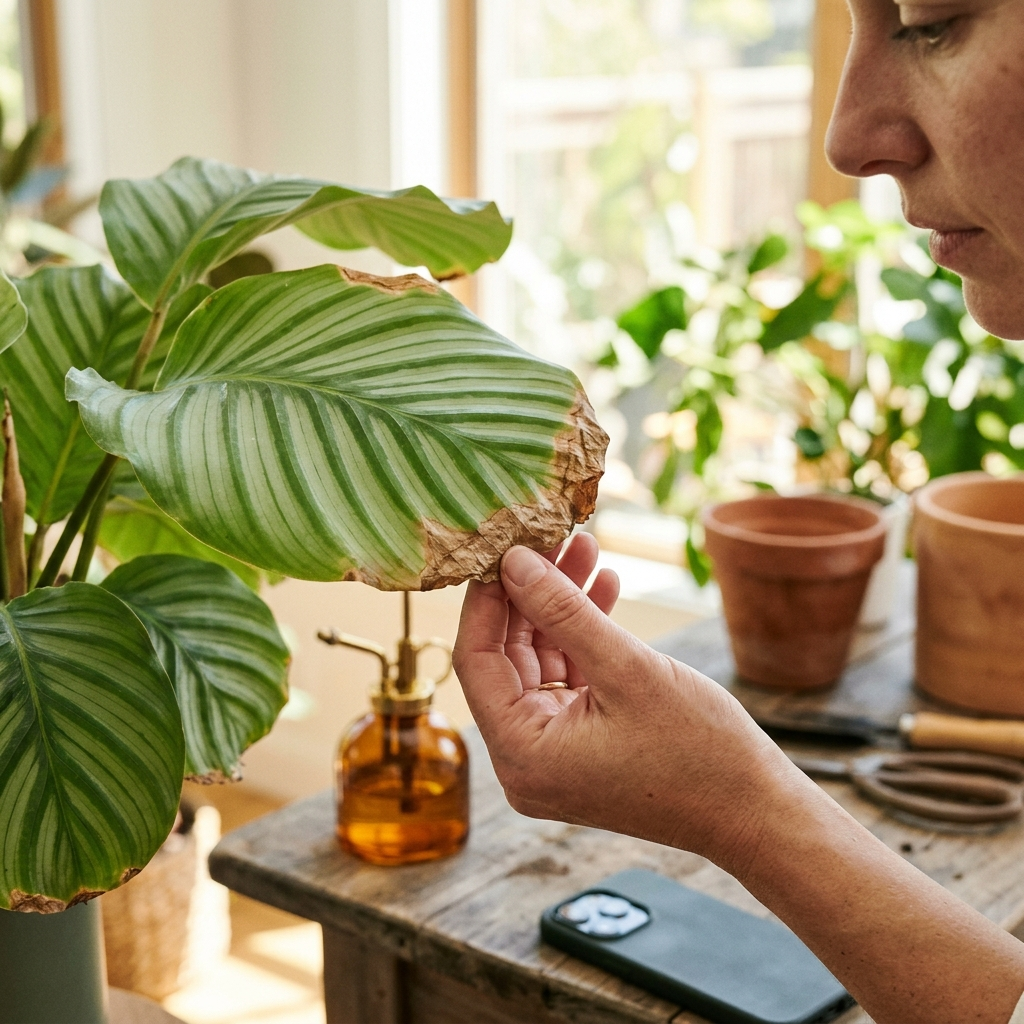
Houseplant leaf tips turn brown and crispy primarily due to moisture stress that prevents water from reaching the leaf margins. Common causes include inconsistent watering, low ambient humidity, excess mineral salts from tap water or fertilizer, and root damage. Pinpointing the specific environmental trigger is essential before adjusting your care routine.
The Impact of Brown Leaf Tips on Plant Vitality
Brown, dry leaf tips—often termed tip burn or necrosis—indicate that a plant cannot maintain adequate water balance. Tissue dies when leaf cells lose moisture faster than the roots can supply it.
Left unaddressed, this stress can cause progressive dieback, leading entire leaves to yellow, dry out, and drop. Because several cultural problems cause identical tip burn, home gardeners often misdiagnose the cause and apply remedies that worsen the condition.
Watering Irregularities: Under-Watering vs. Over-Watering
Both chronic under-watering and chronic over-watering produce brown, crispy tips, though through different mechanisms. Under-watering deprives the root system of moisture, causing the outermost foliage to dry out first.
Over-watering keeps the potting mix saturated, displacing oxygen and causing root decay. As roots rot, the plant loses the capacity to take up water, producing drought symptoms at the leaf margins despite damp soil.
How to Distinguish the Two:
- Under-watering: Soil pulls away from the container edges, feels lightweight and dry throughout, and leaves often feel thin or papery before crisping.
- Over-watering: Soil remains soggy, stems may feel soft near the soil line, and brown leaf margins often feature a yellow halo between dead and healthy tissue.
Key takeaway: Check moisture levels deep within the root zone rather than assessing only the soil surface.
Ambient Humidity Deficits and Air Circulation
Many indoor plants, including calatheas, ferns, and peace lilies, originate in tropical environments where relative humidity regularly exceeds 60 percent. Indoor heating and air conditioning frequently reduce humidity below 30 percent, accelerating moisture loss through foliage.
When moisture loss exceeds root uptake, leaf tips dry out and turn brittle. Placing plants near heating vents, air conditioners, drafty windows, or radiators accelerates this desiccation.
Correcting Low Ambient Humidity:
- Group tropical plants together to create a localized microclimate with higher humidity.
- Run a room humidifier near sensitive plants.
- Move plants away from forced-air vents, radiators, and exterior drafts.
Key takeaway: Misting provides only momentary surface moisture and does not raise ambient room humidity; consistent environmental changes are required.
Soluble Salt Accumulation and Tap Water Sensitivity
Potted houseplants grow in closed containers where dissolved minerals and salts accumulate unless flushed away. Municipal tap water containing chlorine, chloramines, fluoride, or dissolved carbonates can build to levels that sensitive species cannot tolerate.
Excess fertilizer also deposits soluble salts in the potting mix. These salts draw water away from root tissue through osmotic pressure, causing marginal burn on foliage.
To clear accumulated salts, flush the soil every few months by slowly pouring distilled or filtered water through the container until it drains freely from the bottom, then discard the collected runoff.
Key takeaway: Provide filtered water or rainwater to sensitive houseplants, and apply fertilizer at half-strength during active growth periods.
Diagnosing Environmental Stress Accurately
Because environmental stress, nutrient burn, and fungal or bacterial issues can present similar symptoms, an accurate diagnosis prevents unnecessary or counterproductive treatments. The Plant Doctor: Plant Care app helps home gardeners clarify ambiguous symptoms. By taking a clear photo of the affected foliage and overall plant, the app identifies the species, assesses environmental stress, detects pests, and provides step-by-step treatment advice.
For best results with Plant Doctor, photograph the plant in bright, indirect light, capturing both the margin between green and brown tissue and the pot's growing conditions. The app includes a daily free diagnosis allowance, while an optional PRO upgrade removes ads and unlocks unlimited diagnoses.
Key takeaway: Distinguishing environmental stress from disease ensures you apply the correct care steps without delay.
Step-by-Step Care Checklist for Affected Plants
- Inspect the root zone: Check the lower portion of the pot with a moisture meter or a wooden probe to assess true moisture levels.
- Trim dead tissue: Use clean, sharp shears to cut away brown tips, leaving a narrow margin of brown to avoid cutting into healthy green tissue.
- Flush the soil: Leach the container with room-temperature filtered water to rinse out accumulated mineral and fertilizer salts.
- Adjust placement: Move the plant away from direct drafts, radiators, and HVAC vents.
- Review care requirements: Use the Plant Doctor: Plant Care app to check your plant's specific light, humidity, and watering needs.
Restoring Foliar Health
Brown, crispy leaf tips signal that watering, humidity, or soil salinity needs adjustment. While existing necrotic tissue will not recover, correcting underlying care issues protects new growth. Monitoring soil moisture, improving humidity, and using diagnostic tools when symptoms are unclear will help keep indoor plants healthy over the long term.
Frequently Asked Questions
No. Once leaf tissue turns brown and dries out, those cells cannot regenerate. You can trim away the dead portions with clean scissors for appearance, taking care not to cut into healthy green tissue.
Misting offers only temporary surface moisture that evaporates quickly. It does not raise ambient room humidity long enough to stop leaf tips from crisping. Using a room humidifier or grouping plants together is more effective.
Tap water frequently contains fluoride, chlorine, chloramines, and dissolved minerals. In sensitive houseplants, these compounds accumulate at leaf margins over time, causing localized tissue burn.
Check moisture deep in the pot. If the root ball is dry throughout and foliage is brittle, under-watering is the likely cause. If the soil remains soggy and brown margins have a yellow border, root damage from over-watering is more probable.