How to Tell if a Succulent Is Overwatered or Underwatered: A Diagnostic Guide
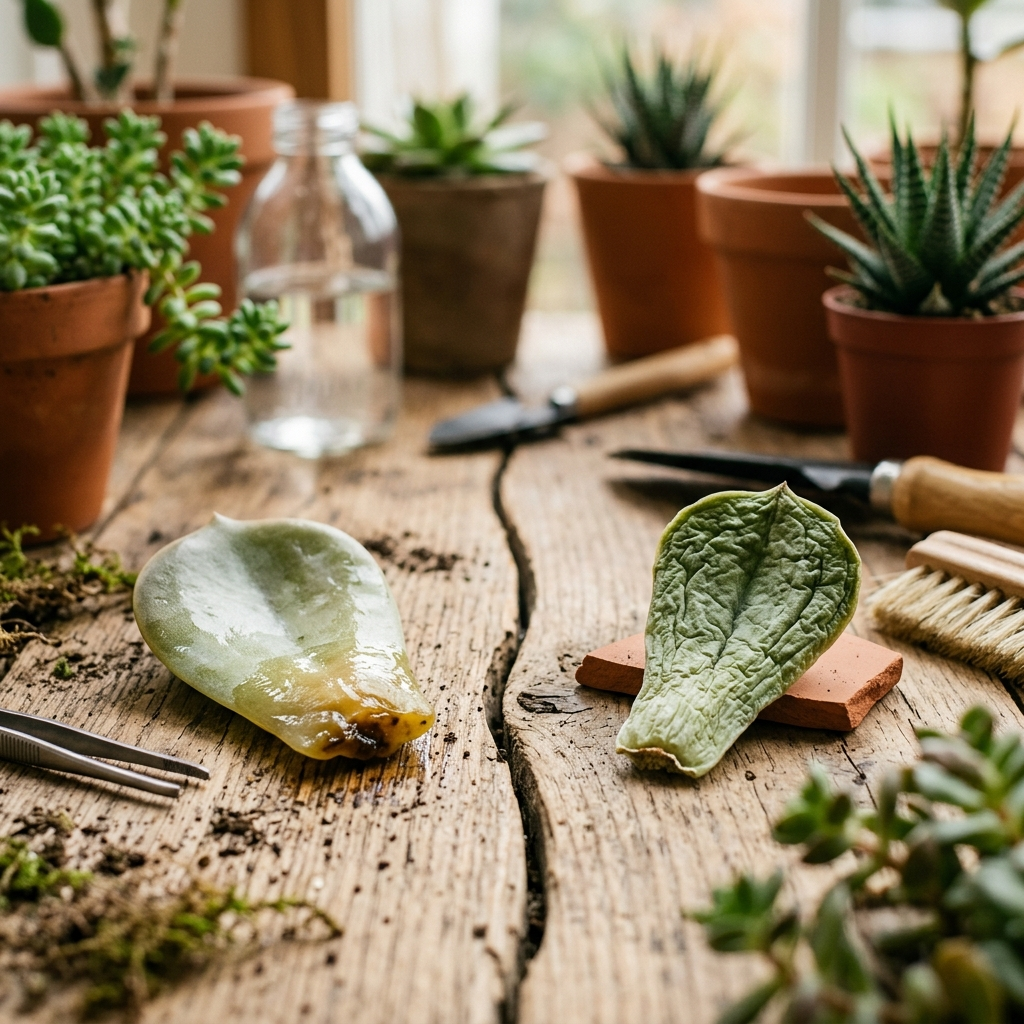
To determine whether a succulent is overwatered or underwatered, evaluate leaf turgor and translucency. Overwatered succulents feature swollen, soft, translucent leaves that drop at the slightest touch due to cellular rupture. Conversely, underwatered specimens display deflated, matte, wrinkled leaves that remain firmly attached while conserving residual moisture.
Misdiagnosing water stress is the leading cause of indoor succulent decline. Because both conditions can cause lower leaves to soften or shed, growers often water specimens already experiencing root hypoxia in saturated soil. Understanding the physiological distinctions between moisture toxicity and dehydration allows for timely intervention before systemic necrosis develops.
The Core Diagnostic: Leaf Texture, Color, and Firmness
Succulents store water in specialized parenchymal cells within their leaves and stems. These cells respond predictably to hydration shifts.
In an overwatered succulent, parenchymal cells take up water beyond their structural limit. The resulting turgor pressure ruptures cell walls, causing edema. Leaves turn pale, watery, or yellowish and feel soft to the touch. The petiole-to-stem connection weakens, causing leaves to drop cleanly when lightly brushed.
An underwatered succulent, by contrast, draws down internal water reserves to protect the apical meristem. Foliar turgor decreases gradually, leaving leaves limp, leathery, and flat, often with fine longitudinal wrinkles on their dorsal surfaces. Color dulls to a matte finish or deepens into stress pigments (reds and purples) without translucency.
Key takeaway: Translucent, soft tissue indicates overwatering; matte, wrinkled, and pliable tissue indicates dehydration.
Root System Assessment: Healthy Roots vs. Anaerobic Rot
When foliar symptoms are ambiguous, root examination provides definitive evidence. Roots reflect substrate moisture dynamics well before symptoms appear on foliage.
Gently remove the root ball from its container to inspect the root tips:
- Healthy root system: Roots are white, tan, or light pink, firm, tensile, and earthy in odor.
- Overwatered root system (Root rot): Roots turn dark brown or black, feel slimy, and slough off easily under light tension, leaving thin vascular cores behind. They often emit a sour, anaerobic odor characteristic of oomycete pathogens such as Pythium or Phytophthora.
- Underwatered root system: Roots appear pale, dry, and brittle. They may crumble when handled, but show no rot or foul odor.
Key takeaway: Dark, slimy roots confirm rot from prolonged saturation, whereas desiccated, brittle roots indicate persistent drought.
Soil Physics and Drainage Mechanics
Water stress is determined not only by irrigation frequency, but by substrate porosity and evaporation rates. Succulents require porous substrates that facilitate gas exchange.
Standard peat-based potting soils retain capillary water for extended periods, collapsing aeration voids and depriving roots of oxygen. When respiration stops, root hairs die, leaving the plant unable to absorb water. Consequently, an overwatered succulent often displays secondary dehydration symptoms in its crown, leading growers to supply more water erroneously.
An effective succulent substrate contains 50% to 70% inorganic aggregate, such as pumice, perlite, coarse sand, or calcined clay. This structure allows gravitational water to drain promptly while preserving airflow in the rhizosphere.
Key takeaway: Dense soils induce hypoxia that mimics drought symptoms. Use fast-draining, mineral-based media to preserve root respiration.
Step-by-Step Recovery Protocols
Once you identify whether the specimen is overwatered or dehydrated, apply the corresponding recovery protocol.
Rehabilitating an Overwatered Succulent
- Unpot the plant: Remove the succulent from its container and clear saturated soil from the root zone.
- Excise decayed tissue: Using sterilized shears, remove necrotic, blackened, or soft roots until only healthy tissue remains. If stem rot is present, excise the stem cleanly above the decay margin.
- Allow wounds to callus: Place the bare-root plant in a warm, dry area in indirect light for 3 to 5 days to allow cuts to suberize.
- Repot in dry substrate: Replant in an unglazed terra-cotta pot using a mineral-rich gritty mix. Withhold water for 7 to 10 days to allow root initials to form.
Rehydrating an Underwatered Succulent
- Confirm viable roots: Check that functional roots remain before watering. Rootless plants cannot absorb moisture and may decay in damp media.
- Apply bottom-watering: Place the pot in a basin containing several inches of room-temperature water for 30 to 45 minutes, allowing capillary action to saturate the root zone from below.
- Drain thoroughly: Remove the pot and allow gravitational water to drain completely for 15 minutes. Empty saucers promptly to prevent standing water.
- Adjust watering schedule: Water only after the substrate has dried through its entire depth, rather than assessing only the surface layer.
Key takeaway: Overwatered plants require immediate drying, root debridement, and callusing; underwatered plants require deep bottom-soaking followed by complete drainage.
Diagnostic Checklist: Rapid Identification Table
Use this reference checklist to evaluate plant symptoms before intervening:
- Leaf Appearance: Overwatered leaves appear translucent, pale yellow, or waterlogged. Underwatered leaves appear matte, deflated, and wrinkled.
- Leaf Texture: Overwatered foliage is soft, mushy, and easily bruised. Underwatered foliage is limp, leathery, and flexible.
- Leaf Shedding: Overwatered plants drop plump leaves from the base and mid-stem upon touch. Underwatered plants retain desiccated leaves; the lowest foliage gradually turns papery and crisp.
- Stem Condition: Overwatered stems soften, darken near the soil line, and may collapse. Underwatered stems remain firm, though their diameter may contract slightly.
- Substrate State: Overwatered soil remains dense, damp, and cool days after irrigation. Underwatered soil shrinks from pot walls, creating hydrophobic channels.
Key takeaway: Translucency and stem softening indicate excess moisture; shrinking and leaf shriveling indicate drought.
Conclusion: Restoring Equilibrium to Your Succulents
Succulent care relies on balancing seasonal growth patterns, substrate aeration, and foliar turgor. By planting in well-aerated mineral substrates, applying thorough soak-and-dry watering cycles, and monitoring leaf condition, you can maintain long-term plant health.
When diagnostic questions arise, systematic assessment of leaf firmness and root integrity provides the clearest path to correcting environmental stress and supporting steady growth.
Frequently Asked Questions
An overwatered succulent will not recover on its own if the substrate remains saturated or root rot has developed. You must unpot the plant, excise necrotic root tissue, allow cut surfaces to callus, and repot in dry, gritty substrate.
If the leaves are dry, thin, and brittle, the plant is naturally reabsorbing old foliage or experiencing mild dehydration. If they are translucent, soft, and mushy, excess moisture has compromised the root system.
A dehydrated succulent with intact roots typically re-establishes cellular turgor within 24 to 72 hours following thorough bottom-soaking.
No. Misting moistens only the surface of the plant and substrate without penetrating the root zone, while promoting fungal foliar disease. Succulents require deep root irrigation followed by a complete dry-down period.