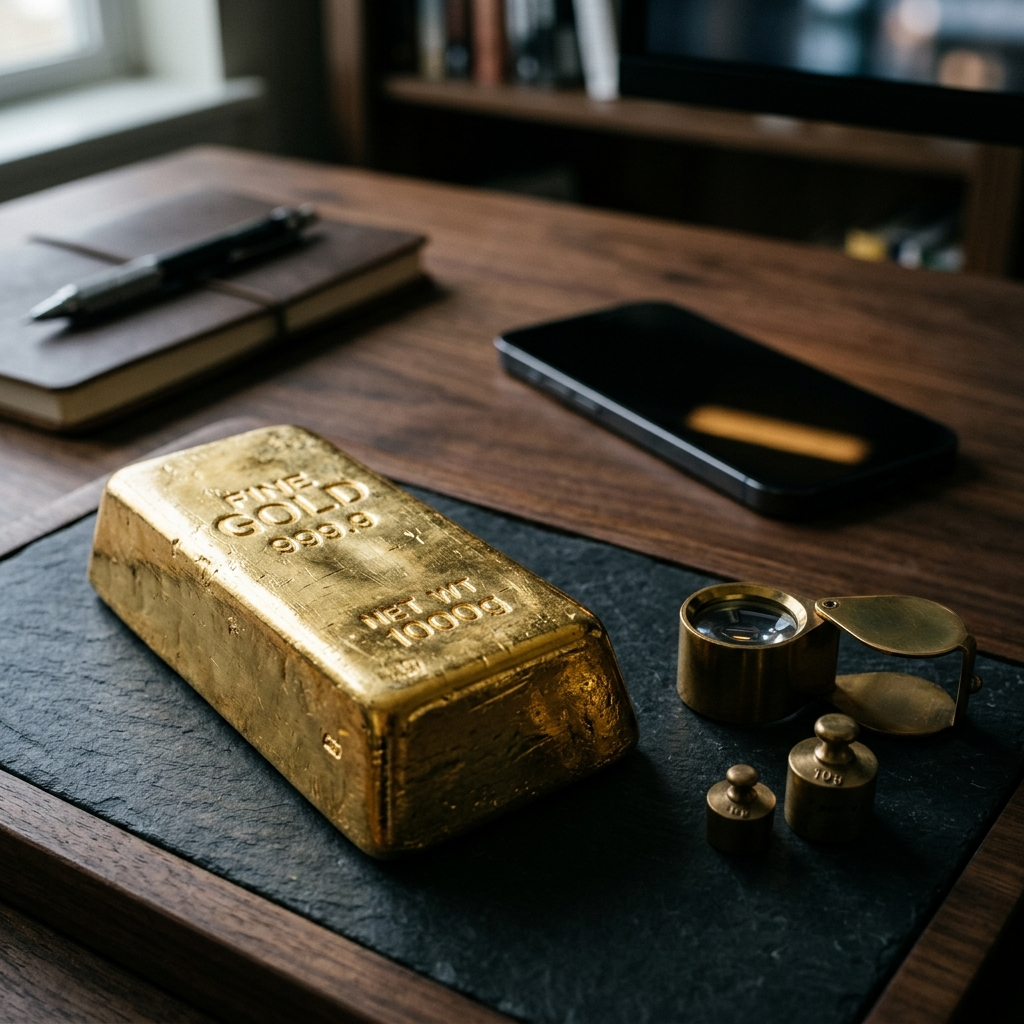
Understanding 24K vs 22K Gold Purity and Pricing Differences
The core difference between 24K and 22K gold lies in elemental purity: 24-karat gold contains 99.9 percent pure gold, whereas 22-karat gold contains 91.67 percent gold alloyed with 8.33 percent stabilizing metals such as copper, silver, or zinc. Because of this composition, raw 22K gold trades at precisely 91.67 percent of the 24K spot price per unit of weight before manufacturing fees or retail markups. Understanding this mathematical spread enables buyers and investors to distinguish between true intrinsic metal value and added fabrication premiums.
The Core Problem: Why Purity Confusion Costs Buyers Money
Retail buyers, jewelry collectors, and private investors frequently overpay for gold because they treat retail quotes as uniform across purity tiers. When a merchant presents a finished piece of jewelry or an investment coin, the quoted price reflects both the fluctuating spot price and non-standardized markups. Without isolating the raw karat value, consumers cannot determine whether an increased price stems from rising bullion markets, alloy ratios, or excessive fabrication fees.
Furthermore, gold pricing changes minute by minute across international exchanges. When shopping across regional markets or comparing items listed in grams, troy ounces, or tolas, calculating real-time karat values manually creates room for costly calculation errors. Identifying the exact spread between 24K and 22K provides the baseline benchmark required to negotiate fair transactions and time purchases effectively.
Takeaway: Conflating pure metal value with retail markups leads to inflated acquisition costs, making an exact mathematical baseline essential before entering any transaction.
The Mathematical Relationship Between 24K and 22K Valuation
Karatage measures the ratio of pure gold to other metals on a 24-part scale. Pure gold without foreign elements rates as 24 karats (999 fineness in the millesimal system). By comparison, 22-karat gold (916 fineness) consists of 22 parts gold and 2 parts secondary alloy. To determine the intrinsic melt value of 22K gold, market participants apply a direct mathematical formula based on the current 24K spot rate:
- Purity Fraction: 22 divided by 24 equals 0.91667 (91.67 percent pure content).
- Unit Melt Price: 22K Spot Price = 24K Spot Price × 0.91667.
- Unit Spread: The baseline discount between 24K and 22K is always 8.33 percent of the 24K price for identical weight units.
If 24K gold trades at 75.00 USD per gram, the baseline intrinsic value of 22K gold is exactly 68.75 USD per gram (75.00 × 0.91667). If an investor observes 22K jewelry priced at 82.00 USD per gram, the additional 13.25 USD per gram represents fabrication costs, merchant profit margins, and distribution expenses rather than physical metal worth.
Takeaway: Unfinished 22K gold is strictly worth 91.67 percent of the 24K spot price; any charge above this figure represents non-metal costs such as fabrication or retail spread.
Physical Characteristics and Practical Utility
The choice between 24K and 22K extends beyond financial formulas into structural mechanics. Pure 24K gold is exceptionally malleable and soft, making it vulnerable to surface scratches, bending, and structural warping under daily wear. Consequently, 24K is primarily minted into sovereign bars, cast ingots, and official investment coins that remain stored inside protective assay cards or secure deposit vaults.
Introducing durable base metals changes the physical properties of the material. In 22K gold, the addition of silver, copper, or zinc reinforces the metal lattice, creating high tensile strength while preserving the rich, warm luster characteristic of high-purity gold. This makes 22K the standard alloy for high-end bridal jewelry, cultural heirlooms, and wearable luxury assets across Asian, Middle Eastern, and European markets.
- 24-Karat Gold: Vivid yellow tone, 99.9% purity, highly soft, low scratch resistance, ideal for capital preservation and institutional bullion holdings.
- 22-Karat Gold: Deep golden hue, 91.67% purity, hardened surface profile, moderate wear resistance, ideal for durable decorative pieces and wearable bullion.
Takeaway: 24K gold functions primarily as a static store of value, while 22K gold provides the structural durability needed for wearable items without sacrificing significant metallic purity.
Why Finished 22K Jewelry Often Exceeds 24K Raw Bullion Prices
A common point of confusion occurs when retail shoppers notice that finished 22K jewelry items carry a higher total price tag per gram than raw 24K investment bars. This paradox stems from the structural divergence between bullion manufacturing and jewelry craftsmanship. Bullion bars are machine-stamped or cast in high volume with minimal labor input, yielding fabrication premiums as low as one to three percent above spot value.
Conversely, 22K jewelry involves skilled artisans, intricate filigree, stone setting, hallmarking certifications, and manufacturing wastage. Retail jewelers add making charges ranging from 8 percent to upwards of 25 percent depending on design complexity. When gold prices swing throughout the day, retailers may adjust their retail stickers unevenly, obscuring whether price increases originate from craftsmanship premiums or shifting raw commodity values.
Monitoring live market movements across both karat categories through the Gold Price Tracker & Alerts app enables buyers to isolate these variables. With real-time spot updates refreshing every minute for 24K and 22K rates across grams, troy ounces, and tolas, shoppers can subtract the raw metal value from a retailer quote to evaluate whether the craftsmanship charge is justifiable.
Takeaway: Higher 22K retail unit costs reflect craftsmanship, retail overhead, and wastage fees rather than superior gold content.
Step-by-Step Checklist for Evaluating Gold Prices Before Buying
Use this practical checklist whenever comparing quotes between bullion dealers and retail jewelers to verify fair pricing:
- Check Current Live Rates: Open the Gold Price Tracker & Alerts app to review real-time prices for both 24K and 22K in your local currency (USD, EUR, GBP, or others).
- Confirm the Quoted Weight Unit: Ensure both items use identical units. Standardize the quote to grams, troy ounces, or tolas to prevent distorted comparisons.
- Calculate the True Metal Content: Multiply the total weight of the 22K item by 0.9167 to calculate its net fine gold weight.
- Isolate Making and Dealer Charges: Subtract the intrinsic metal value (fine gold weight × current 24K price) from the merchant quote. The remainder is the total fabrication markup.
- Evaluate Market Momentum: Inspect the 24-hour high, low, and change indicators in the interactive charts to confirm whether you are buying near an intraday peak or a market consolidation phase.
- Set Target Alerts: If the dealer margin or current market price sits above your target entry point, set a custom price alert for your preferred karat tier to receive instant notifications when prices reach your buying range.
Takeaway: Systematically separating net gold mass from fabrication overhead ensures transparent comparisons across dealers and karat designations.
Strategic Considerations for Long-Term Portfolio Allocation
Capital preservation strategies require an objective assessment of liquidity and buyback friction. Institutional bullion dealers purchase 24K bars at tight bid-ask spreads, frequently paying within 0.5 to 1.5 percent of the current spot price. The liquidity of 24K is global, standardized, and universally recognized without requiring extensive assay testing when enclosed in original mint packaging.
Liquidating 22K jewelry involves greater friction. When selling back to a refiner or jeweler, the seller recovers only the intrinsic melt value of the 91.67 percent gold content. The original making charges, design fees, and retail sales taxes are unrecoverable. For pure portfolio growth and wealth storage, 24K bullion remains the mathematically superior instrument. For dual-purpose acquisitions where personal utility and ornamentation matter, 22K gold offers an effective balance of durability and intrinsic equity.
Investors tracking both asset classes can monitor historical trends over 7-day, 1-month, 3-month, and 1-year chart horizons within the Gold Price Tracker & Alerts platform to understand how macro trends influence spot baselines across different economic cycles.
Takeaway: Investment-first portfolios favor 24K bullion due to minimal transaction friction, whereas 22K balances aesthetic utility with tangible residual metal value.
Conclusion
Differentiating between 24K and 22K gold requires separating pure elemental composition from secondary manufacturing costs. With 22K gold intrinsically valued at 91.67 percent of the 24K spot rate, any discrepancy in retail pricing reflects fabrication, distribution, and commercial margin. Tracking minute-by-minute spot price movements, evaluating multi-timeframe trend charts, and establishing custom threshold alerts using the Gold Price Tracker & Alerts app equips you with the verified data required to execute gold transactions with financial confidence.
Frequently Asked Questions
The price of 22K gold is calculated by multiplying the live 24K spot rate by 0.9167 (22 divided by 24). This reflects the 91.67 percent gold purity of the 22K alloy before local taxes, dealer premiums, or fabrication fees are applied.
Finished 22K jewelry involves artistic fabrication, labor, hallmarking, and wastage fees known as making charges. These added costs can exceed the 8.33 percent discount in raw metal purity, making the finished retail piece cost more per gram than raw 24K investment bullion.
Yes, for strictly financial investment purposes. 24K bullion is standardized, trades at very tight bid-ask spreads near spot price, and avoids the unrecoverable craftsmanship premiums associated with 22K jewelry upon resale.
Wearing 24K gold daily is generally not recommended because pure gold is extremely soft and prone to bending, scratching, and wearing down. 22K gold includes hardening alloy metals like copper and silver, making it far more suitable for frequent wear.