How to Calculate Scrap Gold Scrap Value per Gram Live
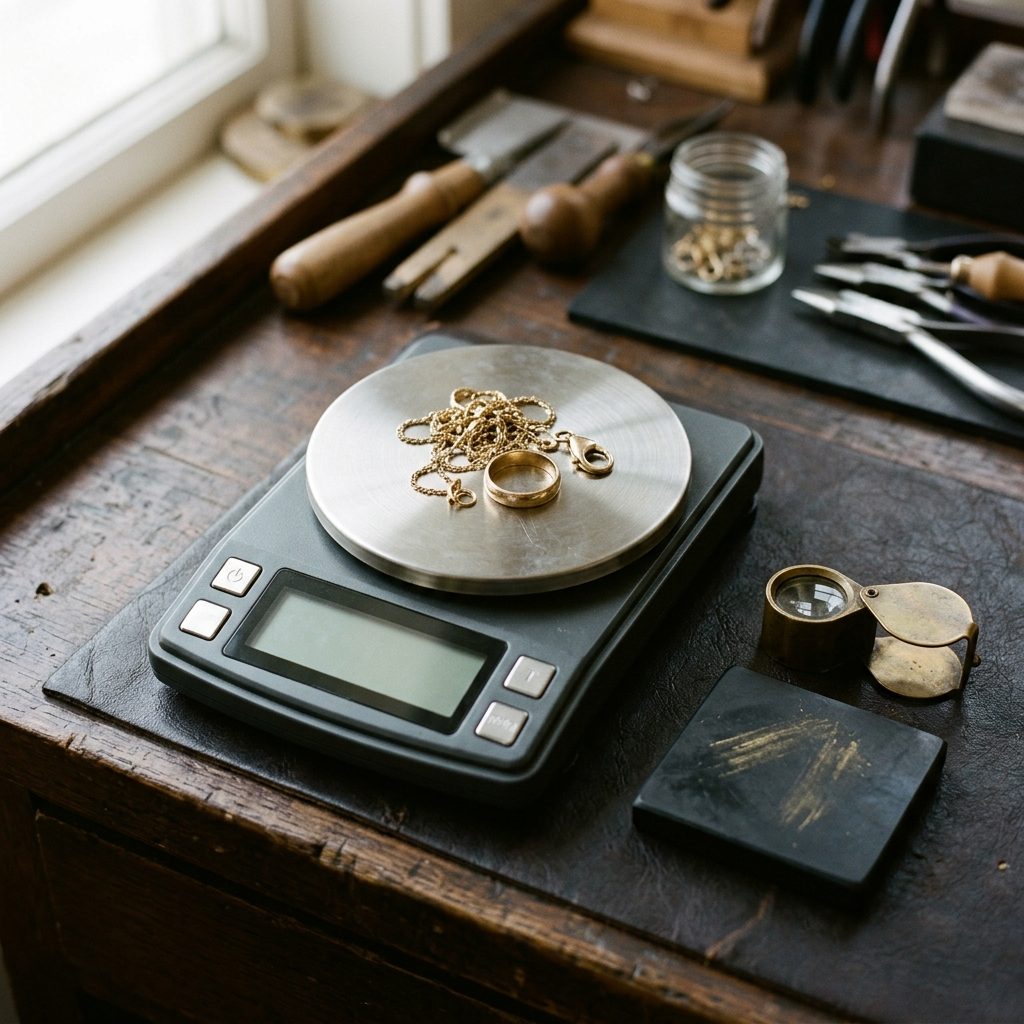
To calculate the live scrap gold value per gram, multiply the live spot price of pure 24K gold per gram by the gold purity percentage of your item, then multiply by the buyer's payout rate. For example, a 14K item contains 58.33% pure gold, so its melt value is 58.33% of the live 24K spot price.
The Core Problem: Gold Price Volatility and Valuation Traps
Precious metal prices fluctuate continuously during market hours. Sellers and buyers who rely on outdated morning benchmarks or newspaper quotes risk mispricing their transactions. Without live spot figures, individuals often accept offers well below fair value on jewelry, dental scrap, or broken bullion.
Evaluating scrap gold requires distinguishing intrinsic metal value from actual buyer payouts. Calculating the underlying melt value independently allows you to determine whether a dealer's bid is competitive before agreeing to a sale.
Understanding Purity and the Karat Measurement System
Gold purity is measured in karats, which represent parts of pure gold out of 24. Pure gold is 24 karats (99.9% purity, or 24/24). Lower karat ratings designate alloys containing metals such as copper, silver, or zinc to improve durability.
- 24K Gold: 99.9% pure (0.999 millesimal fineness)
- 22K Gold: 91.67% pure (22/24 or 0.916 millesimal fineness)
- 21K Gold: 87.5% pure (21/24 or 0.875 millesimal fineness)
- 18K Gold: 75.0% pure (18/24 or 0.750 millesimal fineness)
- 14K Gold: 58.33% pure (14/24 or 0.583 millesimal fineness)
- 10K Gold: 41.67% pure (10/24 or 0.417 millesimal fineness)
Key takeaway: Verify the hallmark stamped on your item to establish its baseline purity before calculating value.
The Mathematical Formula for Calculating Live Scrap Value
Calculating scrap value per gram follows a three-step formula. Spot gold prices are traditionally quoted per troy ounce on global commodity exchanges, whereas local trade often operates in grams or tolas.
Step 1: Determine the Live 24K Price per Gram
If your baseline price is quoted in troy ounces, divide the 24K spot price by 31.1035 (the number of grams in a troy ounce). Alternatively, tracking tools such as Gold Price Tracker & Alerts provide live prices per gram directly for 24K, 22K, 21K, and 18K purities without manual unit conversion.
Step 2: Calculate the Intrinsic Melt Value per Gram
Multiply the live 24K gram price by the purity decimal:
Melt Value per Gram = Live 24K Price per Gram × (Karat Rating / 24)
For example, if live 24K gold trades at $75.00 per gram, the intrinsic melt value of 18K gold is $75.00 × (18 / 24) = $56.25 per gram.
Step 3: Factor in Dealer Margins and Refining Costs
Scrap buyers do not pay 100% of the melt value. They deduct expenses for refining, assaying, melting loss, and operating margins. Buyers typically pay between 70% and 90% of the total melt value for scrap jewelry:
Estimated Cash Offer = Melt Value per Gram × Total Weight in Grams × Payout Percentage
Key takeaway: Melt value represents the theoretical ceiling of raw metal value; cash offers are lower to account for processing costs and buyer margin.
Managing Weight Measurement and Stone Deductions
Weighing jewelry without deducting non-gold elements leads to inaccurate valuations. Gemstones, enamel, and steel clasp springs add gross weight but carry no gold scrap value.
- Use a calibrated precision scale: Standard kitchen scales do not provide the precision required for precious metals. Use a digital jeweler scale measuring to at least two decimal places (0.01g).
- Deduct weight for non-gold components: If an 18K ring weighs 8.0 grams and includes a gemstone weighing 1.5 grams, calculate scrap value using only the 6.5 grams of actual gold alloy.
- Verify weight units: Confirm that the scale is set to metric grams rather than pennyweights (dwt) or avoirdupois ounces. Unit discrepancies distort valuation calculations.
Key takeaway: Base your calculations strictly on the net weight of the gold alloy, excluding non-metallic inclusions.
Tracking Live Market Movements for Favorable Execution
Spot gold trades continuously during the market week, and prices can shift within a single session based on macroeconomic announcements, currency fluctuations, or trading volumes.
Using a tool like Gold Price Tracker & Alerts allows users to monitor live price changes per gram in their preferred currency (such as USD, EUR, or GBP) with updates refreshing every minute. Users can also set custom price alerts for specific karat tiers to receive notifications when target levels are reached, and review price charts from 24 hours to 1 year to evaluate recent trends.
Key takeaway: Real-time price monitoring and automated alerts help you identify price changes and transact at your target price.
Practical Step-by-Step Checklist for Selling Scrap Gold
- Inspect the Hallmarks: Identify the purity stamp (such as 750 for 18K or 585 for 14K) using a magnifying loupe.
- Group Items by Karat: Sort items into separate groups by karat rating so each purity level can be weighed independently.
- Determine Net Weight: Weigh each group in grams on a calibrated digital scale, excluding non-gold elements.
- Check Live Spot Prices: Check the live spot price per gram for 24K gold and your specific karat tiers.
- Compute Total Theoretical Value: Multiply the net gram weight by the live gram price for each karat category.
- Compare Multiple Quotes: Compare buyer payout percentages against your calculated melt value to evaluate competitive bids.
Key takeaway: Knowing your items' exact weights and current melt values provides an objective baseline for negotiations.
Conclusion
Calculating the live scrap value of gold per gram requires three primary inputs: verified purity, net weight in grams, and the current spot price. By applying these formulas and tracking real-time price changes through tools like Gold Price Tracker & Alerts, you can evaluate offers accurately and make informed decisions when selling scrap gold.
Frequently Asked Questions
To calculate the melt value per gram, multiply the live 24K gold spot price per gram by the item's purity fraction (the karat rating divided by 24). For example, multiply 14K gold by 0.5833.
Scrap buyers deduct costs for melting, chemical refining, assay testing, and operating expenses, while factoring in their profit margin. Payouts generally range between 70% and 90% of melt value.
Gemstones, enamel, and base-metal springs add gross weight but no gold scrap value. Their estimated weight must be subtracted from the total item weight before calculating the gold alloy's value.
Gold is traded globally in troy ounces, where one troy ounce equals 31.1035 grams. A standard avoirdupois ounce is lighter, at approximately 28.35 grams. Always confirm scale units before calculating value.