How to Track Calories from Homemade Meals Without a Scale
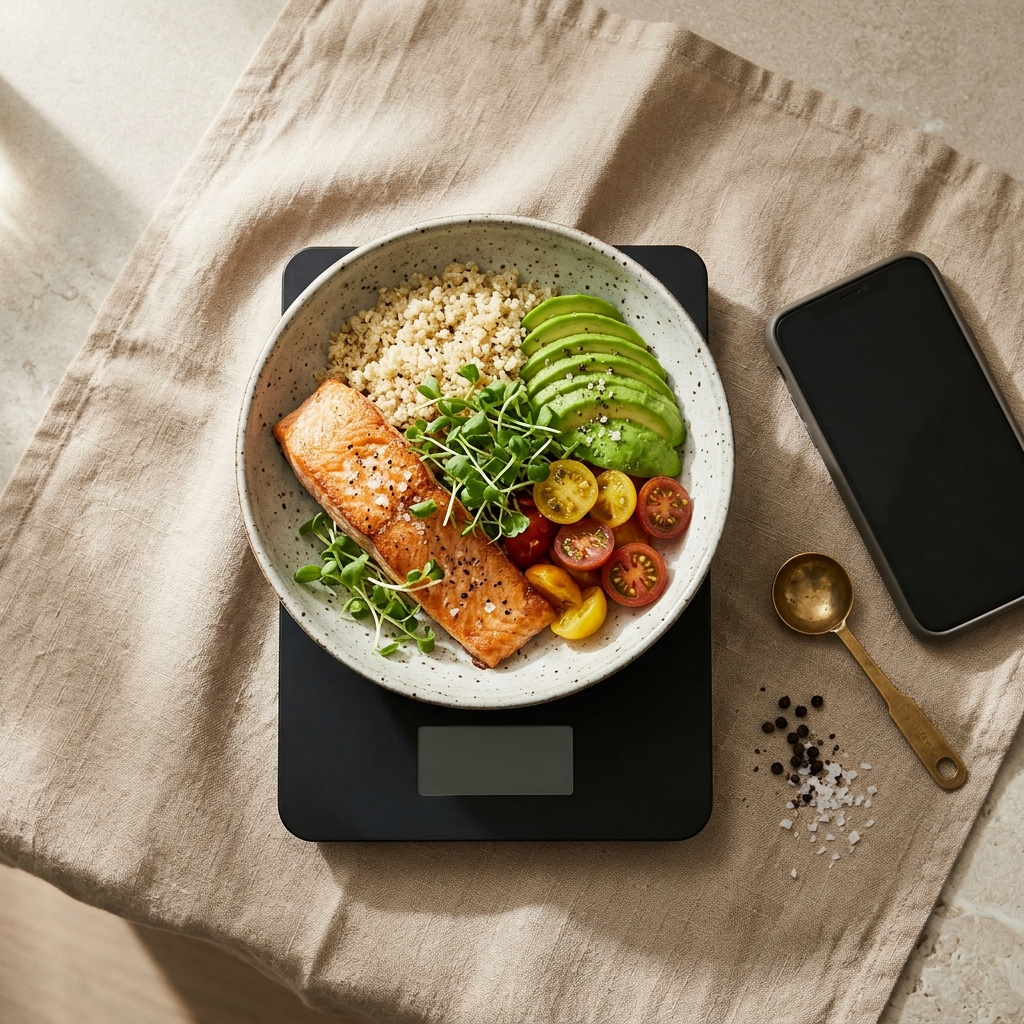
You can track calories from homemade meals without a food scale by combining standardized hand-portion references, batch-volume division, and photo-based AI nutrient estimation. While a scale offers gram precision, consistent reference methods provide sufficient accuracy to manage energy intake and track macronutrients over time.
The Friction of Kitchen Scales in Daily Meal Tracking
Weighing every raw ingredient interrupts cooking and rarely fits a busy schedule. Multi-ingredient dishes such as stews, curries, and casseroles pose an additional challenge: once ingredients are combined, separating individual portion weights is impractical. This friction often causes people to stop logging altogether.
Precision is useful for managing energy balance, but long-term consistency is more critical. A sustainable tracking routine needs to provide reliable nutrition data without complicating meal preparation. Replacing gram measurements with volumetric and visual benchmarks maintains your tracking routine without losing control of portion sizes.
Standard Hand Portions as Reliable Biological Baselines
Your hand serves as a portable reference tool for estimating ingredient quantities and plated portions. Because hand size generally scales with body frame and caloric needs, it offers a consistent baseline across different foods.
- Palm (excluding fingers): Represents approximately 20 to 30 grams of protein (about 3 to 4 ounces of cooked meat, poultry, fish, or tofu).
- Fist: Approximates one cup of dense carbohydrates (such as cooked grains, pasta, or potatoes) or a standard serving of vegetables.
- Cupped hand: Equals roughly half a cup of loose items, such as beans, berries, or dry oats.
- Thumb (tip to first knuckle): Represents roughly one tablespoon (15 milliliters) of fats, such as cooking oils, butter, or nut butters.
Takeaway: Check your plate before serving by matching each component to a hand-size reference to establish basic macronutrient amounts quickly.
The Recipe-Batch Division Technique for One-Pot Dishes
Tracking mixed dishes without weighing individual servings requires calculating the total energy of the batch upfront and dividing the finished volume into equal portions. When preparing soups, casseroles, or stir-fries, note the package quantities of primary calorie sources—such as proteins, grains, and added fats—before cooking.
Once the meal is cooked, divide the dish evenly into containers by sight rather than weighing scoops. For example, if a batch of chicken chili contains roughly 1,600 total calories and you divide it into four equal containers, each serving contains approximately 400 calories. Minor differences in meat or liquid distribution balance out across servings over the week.
Takeaway: Calculate total calories from package amounts before cooking, then divide the finished dish into equal portions.
Using AI Photo Recognition to Bridge the Estimation Gap
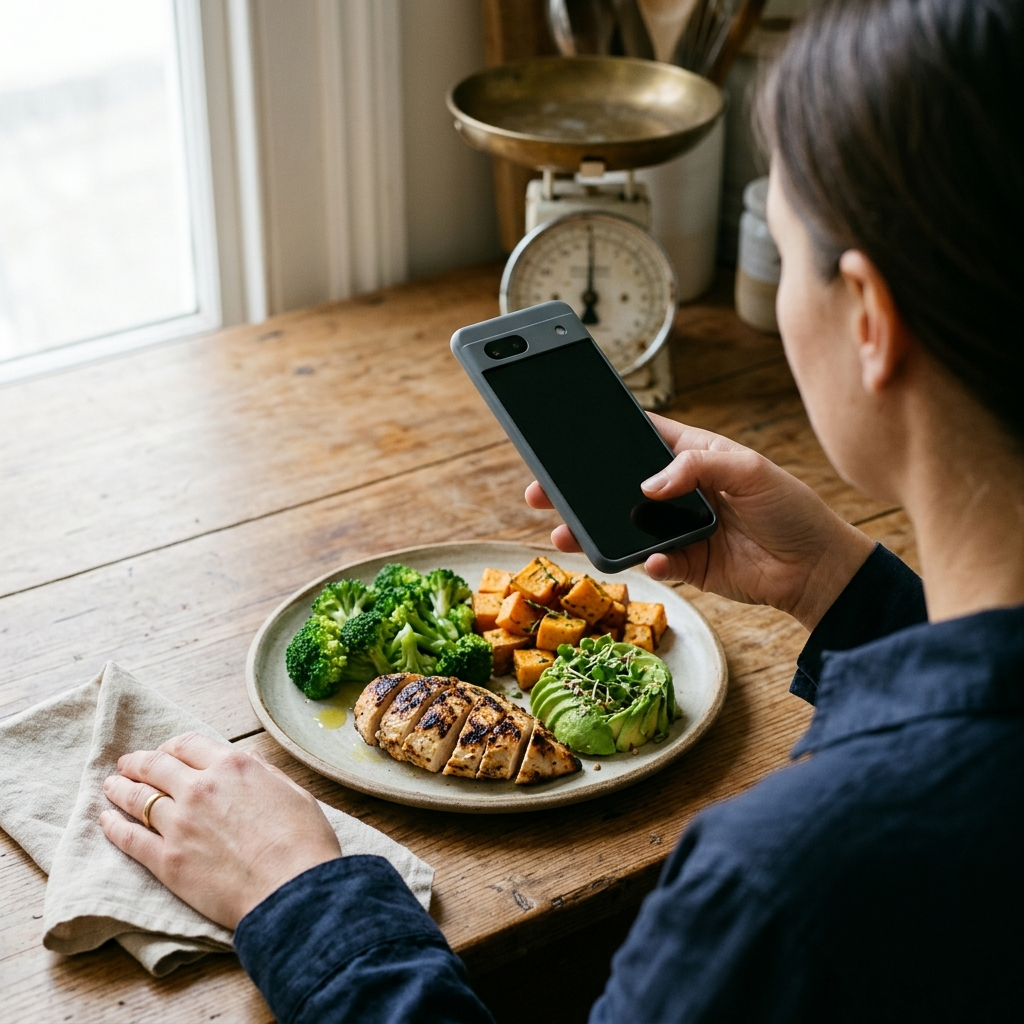
Nutrition apps such as Foodly: Calorie & Macro Log reduce manual estimation by analyzing plated meals directly from a photograph. When you take a picture of your dish, the app identifies the foods, estimates portion volume, and provides a breakdown of calories, protein, carbohydrates, and fats.
Because home cooking involves varied preparations, Foodly includes a confidence score and manual adjustment options. If the app flags moderate confidence on a blended sauce or a covered grain, you can review the suggested items and adjust portion sizes. This feature removes the need to search food databases manually while allowing you to refine recipe details.
Takeaway: Log plated meals with photo recognition to estimate portions quickly, and use manual controls to adjust specific ingredients.
A Step-by-Step Checklist for Scale-Free Meal Logging
Follow this checklist during meal preparation to log intake efficiently without using a scale:
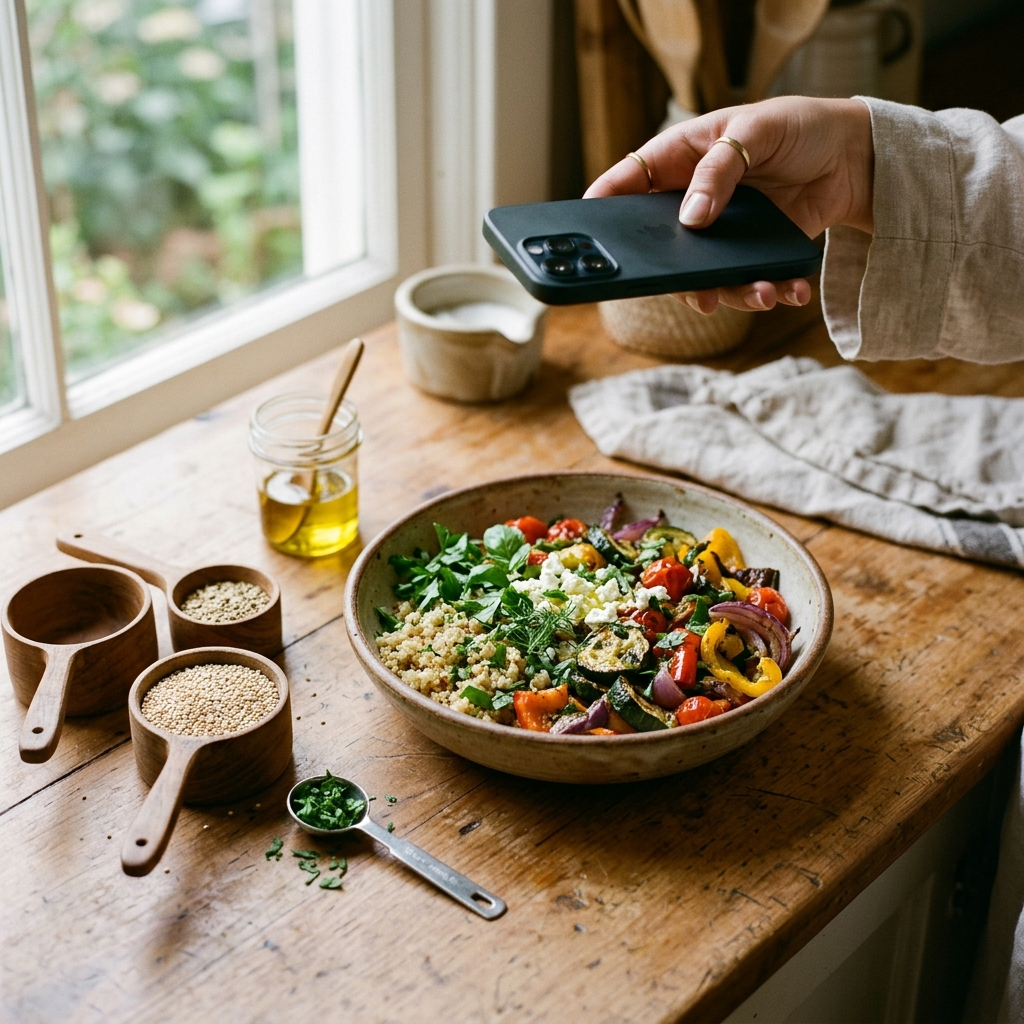
- Account for cooking fats: Measure oils, butter, and dressings with measuring spoons or thumb volumes before cooking. Added fats provide nine calories per gram and are a common source of uncounted calories.
- Log high-calorie ingredients first: Focus on primary proteins, grains, and cheeses. Fibrous vegetables have low calorie density and allow a larger margin of error.
- Photograph with clear visibility: When using Foodly, take photos with clear lighting and visible plate edges so the software can evaluate portion depth and surface area.
- Check the confidence score: Verify that detected items match your meal, and manually add or adjust hidden ingredients like sauces or oils.
- Review weekly trends: Use the weekly dashboard to compare your calorie and macro trends with changes in weight or performance, adjusting your baseline portions if needed.
Long-Term Consistency Over Gram-Level Perfection
Sustained nutritional progress relies on consistent, directional accuracy rather than exact single-meal figures. While uncalibrated visual estimates can easily undercount calorie-dense ingredients, combining hand baselines, container division, and Foodly's photo recognition provides a dependable method for everyday cooking.
Removing the requirement for a kitchen scale reduces the effort needed to maintain your logs. Use standard visual baselines, log meals with photo-based tracking, and use weekly trend data to refine your estimates over time.