Best MyFitnessPal Alternative for Fast AI Photo Logging
For individuals seeking a faster alternative to MyFitnessPal, an AI-powered visual tracker like Foodly (Food Ai) replaces manual database searches with automated meal photo analysis. By estimating portions and identifying ingredients from a photo, Foodly calculates calories and macronutrients in seconds, providing a confidence score and manual adjustment tools to maintain logging accuracy.
The Friction of Traditional Calorie Tracking
Traditional nutrition apps rely on text search databases containing millions of user-submitted entries. While comprehensive, this manual workflow introduces tracking friction. Users must break down home-cooked meals into individual ingredients, estimate weights without a scale, and navigate dozens of duplicate or unverified entries.
This repetitive process often leads to tracking fatigue. Many users abandon logging within weeks because measuring ingredients and typing individual food items takes too much time. When convenience drops, logging consistency declines, undermining dietary goals.
Key Takeaway: Manual database logging requires significant time and effort, frequently leading to inconsistent tracking and abandoned routines.
How AI Photo Logging Streamlines the Process
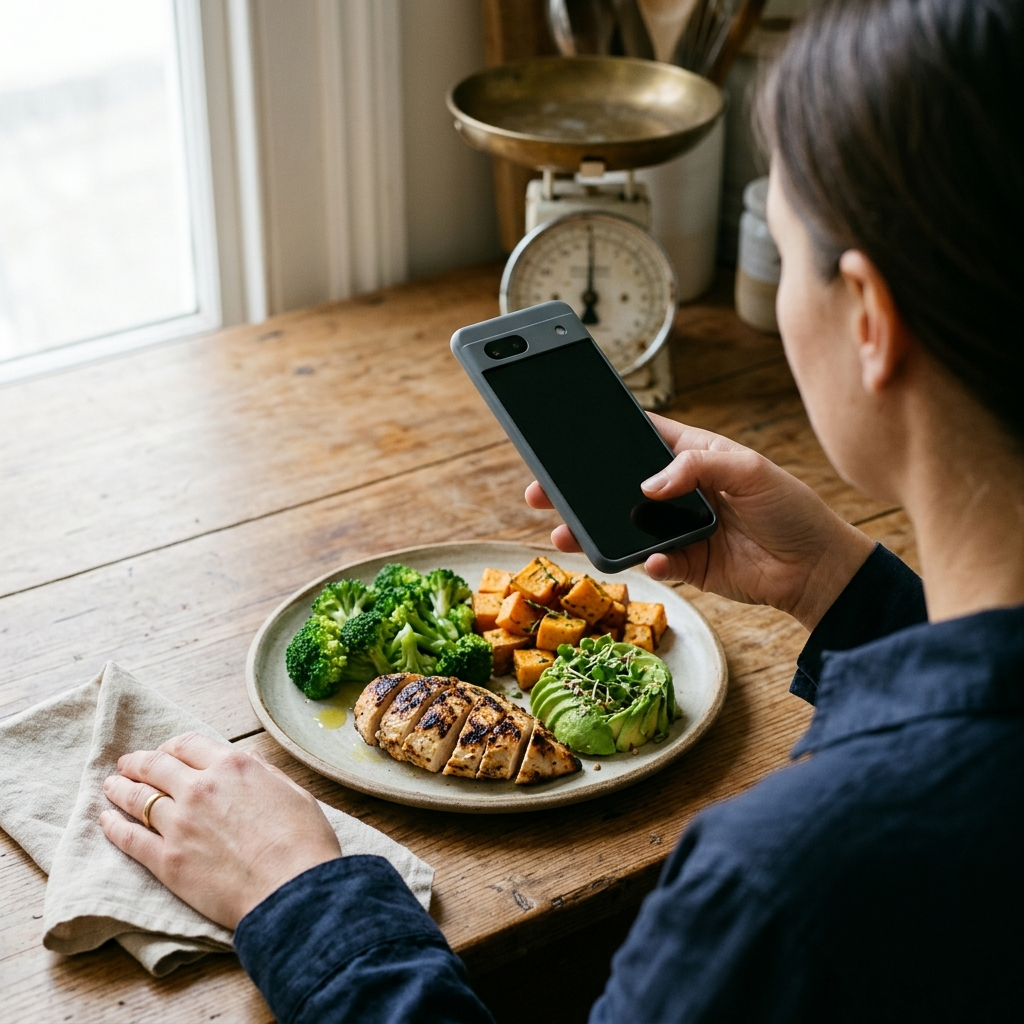
Visual recognition technology simplifies nutrition tracking by shifting ingredient identification from the user to an automated vision model. Instead of typing search queries, users take a photo of their plate before eating.
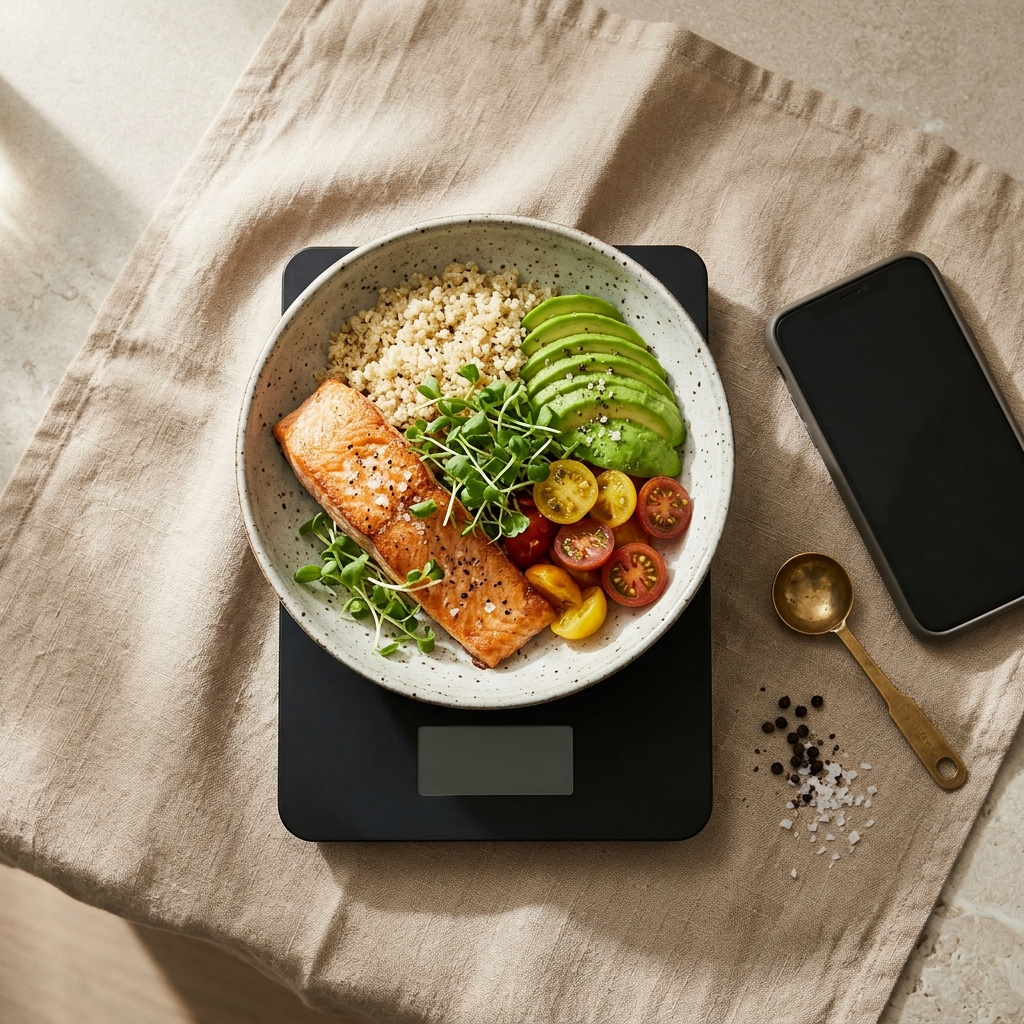
Foodly analyzes the photo to evaluate the meal, identifying components such as grains, protein sources, and vegetables to estimate volume and calculate nutritional values. This workflow delivers immediate estimates for:
- Total Calorie Count: Energy estimates derived from visual volume and recognized food categories.
- Macronutrient Distribution: Gram breakdowns for protein, carbohydrates, and fats.
- Confidence Scoring: A reliability metric showing the system's certainty regarding identified items.
Key Takeaway: Image recognition automates ingredient identification and portion estimation, cutting meal logging down to seconds.
Balancing Automation with Verification: The Smart Confidence System
Automated visual logging works best when paired with verification controls. Vision models cannot reliably determine whether a dish contains full-fat dairy, light milk, or added oils from an image alone. Recognizing this limitation is essential for tracking accuracy.
Foodly addresses this with smart confidence scoring and a manual override option. The confidence score informs you when a dish is straightforward (such as grilled chicken and broccoli) versus when hidden ingredients may warrant review. If an estimate requires correction, you can adjust portions, replace ingredients, or edit macro values directly.
Recommended Logging Protocol
- Capture Clear Lighting: Take meal photos in good lighting from an angle that clearly shows all plate components.
- Review the Confidence Metric: Check the score assigned by the system to gauge estimation certainty.
- Adjust When Necessary: Use the manual override to correct dressings, hidden fats, or portion sizes before saving.
- Save to Daily Totals: Confirm the verified entry to update your dashboard.
Key Takeaway: Reliable visual tracking combines automated photo analysis with human review controls to ensure data accuracy.
Beyond Logging: Monitoring Trends and Macro Balance
Logging meals is only the first step in managing nutrition; reviewing aggregate data drives long-term adherence. Shifting to visual logging does not require sacrificing analytical depth.
Foodly organizes meal entries into a centralized dashboard that tracks real-time progress against your targets. The interface displays remaining daily calorie budgets alongside visual distributions for protein, carbohydrates, and fat. For longer-term evaluation, weekly trend analysis illustrates intake patterns over time, helping you identify deficits or surplus trends without exporting data.
Key Takeaway: Daily dashboards and weekly trend analytics help translate meal data into sustainable dietary habits.
Transitioning from Manual Databases to Visual Logging
Switching from manual databases to photo logging requires setting practical expectations for daily habits. While photo logging accelerates entry, maintaining accurate data still requires user oversight.
- Maintain Plate Visibility: Separate distinct food items when possible, as visible arrangement improves automated portion estimation.
- Account for Hidden Calories: Cooking oils, butter, and liquid sweeteners are rarely visible; adjust entries manually to include them.
- Focus on Weekly Trends: Consistent daily logging over weeks matters more than exact precision on a single meal.
Key Takeaway: Visual tracking succeeds when users pair photo speed with routine adjustments for non-visible ingredients.
Conclusion
For users looking to replace manual database searches in apps like MyFitnessPal, Foodly provides a faster logging alternative. By pairing instant photo analysis with confidence scoring and dashboard analytics, it delivers the speed needed for consistent tracking while keeping you in control of your data.
Frequently Asked Questions
Photo logging takes a few seconds: you photograph your meal, and the application identifies items and calculates nutrients automatically. Manual logging requires searching for individual ingredients, selecting matching brand entries, and estimating weights.
Computer vision models estimate nutrients from visible foods and standard preparation profiles, but they cannot reliably detect hidden oils or dressings. Foodly provides a manual override feature so users can adjust calories and macronutrients for unlisted ingredients.
The confidence score reflects the system's certainty regarding the identified items and portion estimates. A higher score reflects clear recognition, while a lower score indicates you should review and adjust the entry for accuracy.